


A stationary UE can send a Registration Request with the same 5G-GUTI and no change of Registration Area. Check 5GS registration type: periodic registration updating identifies a timer-driven refresh of an existing registration, rather than initial registration or a movement-triggered update.
Periodic registration update helps the UE and AMF maintain a consistent view of registration and reachability during long idle periods. Being registered does not require a continuous NAS signaling connection, and silence alone cannot distinguish a normally idle UE from one that has disappeared.
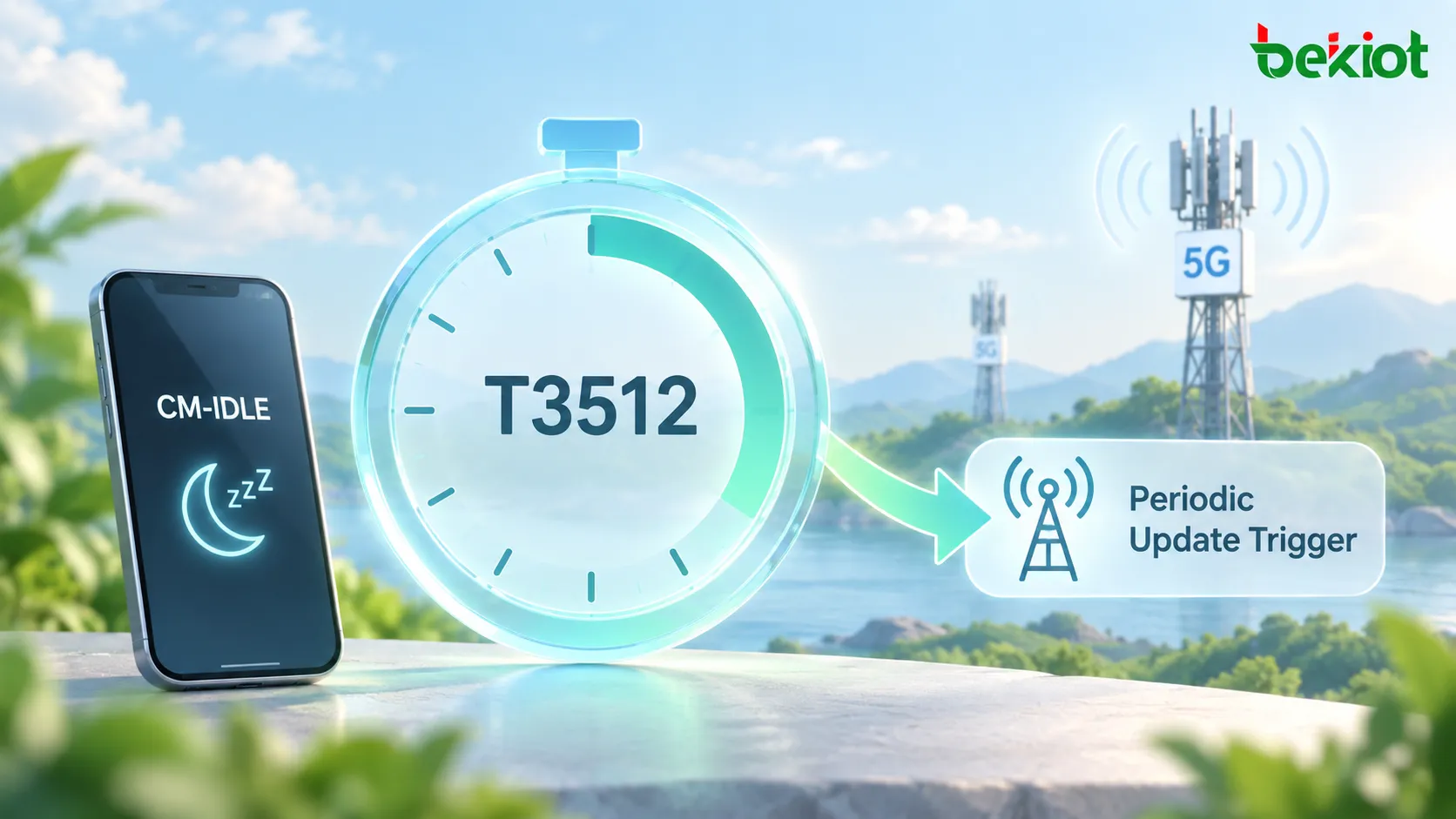
T3512 controls the periodic update on 3GPP access
The network supplies T3512 in Registration Accept. The UE applies the stored value throughout its assigned tracking-area list until a new value is received. The specified default is 54 minutes, not a fixed interval for every deployment. A zero value or deactivation indication disables periodic registration updating.
Without strictly periodic timer support, T3512 starts or restarts when a registered UE leaves 5GMM-CONNECTED for 5GMM-IDLE, and stops when the UE enters 5GMM-CONNECTED. Ordinary signaling activity can therefore shift the next expiry; do not calculate it only from the time of initial registration.
If the network indicates strictly periodic registration timer supported in the MICO indication, T3512 starts after successful registration completion and is neither stopped nor reset by the transition between CONNECTED and IDLE. Expiry in CONNECTED resets and restarts the timer; expiry in IDLE triggers periodic registration under the applicable state conditions.
This article describes normal service over 3GPP access. T3512 does not provide the same periodic-update mechanism for non-3GPP access. Emergency registration is also an exception: on T3512 expiry the UE locally deregisters instead of initiating this periodic update. Restricted service conditions can delay an otherwise due update.
Follow the Registration Request and the existing AMF context
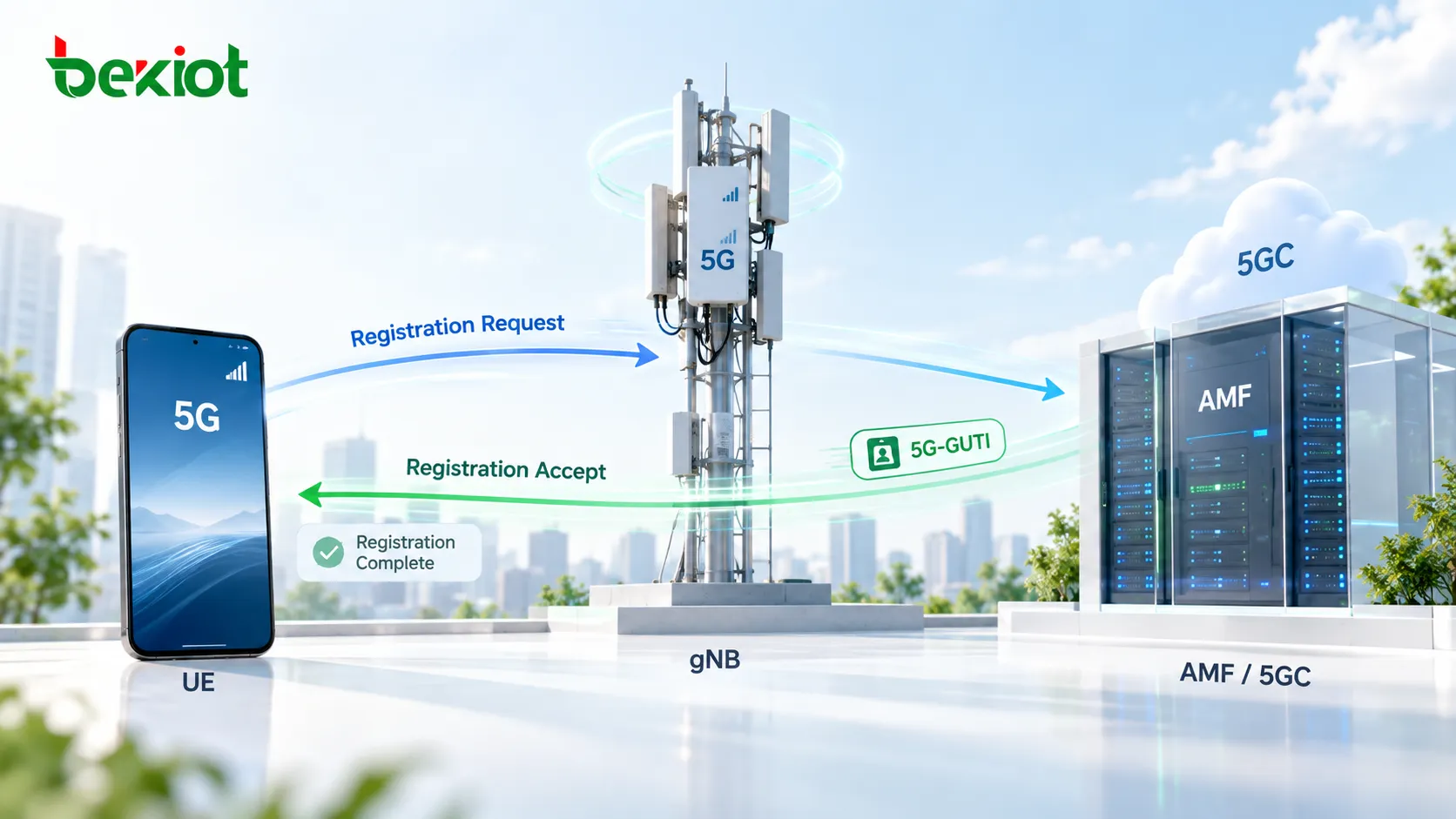
In the ordinary idle case, the UE establishes access signaling, and the gNB forwards the NAS Registration Request in an NGAP Initial UE Message with current location information. Inspect the registration type and 5G-GUTI first. Other information, such as Last Visited Registered TAI, UE Security Capability and PDU Session Status, is included according to the applicable conditions, not as a mandatory bundle in every periodic request.
When the serving AMF and usable UE/security context remain unchanged, the AMF can process the request from existing state. Full authentication, UDM registration and subscription retrieval, a new PCF association, and NRF discovery are not mandatory merely because a periodic timer expired. Perform the identity, security, subscription or policy steps actually required by the current context.
A short successful trace can therefore contain access establishment, the periodic request, AMF context processing and Registration Accept, followed by Registration Complete when required. Reauthentication is not by itself a fault, and a missing 5G-GUTI match can lead to context recovery rather than this simplified path.
What Registration Accept can refresh
Registration Accept can deliver a new T3512 value, a tracking-area list defining the Registration Area, Allowed NSSAI, or a newly allocated 5G-GUTI, as applicable. The UE uses a newly supplied timer value; otherwise it retains the stored timer configuration under the applicable rules.
A received 5G-GUTI requires acknowledgment with Registration Complete. Other specified information, including certain slicing-configuration changes, can also require that message. Check all relevant information elements before judging its absence; the rule is not simply that no new identity always means no acknowledgment.
How the AMF supervises a UE that does not return
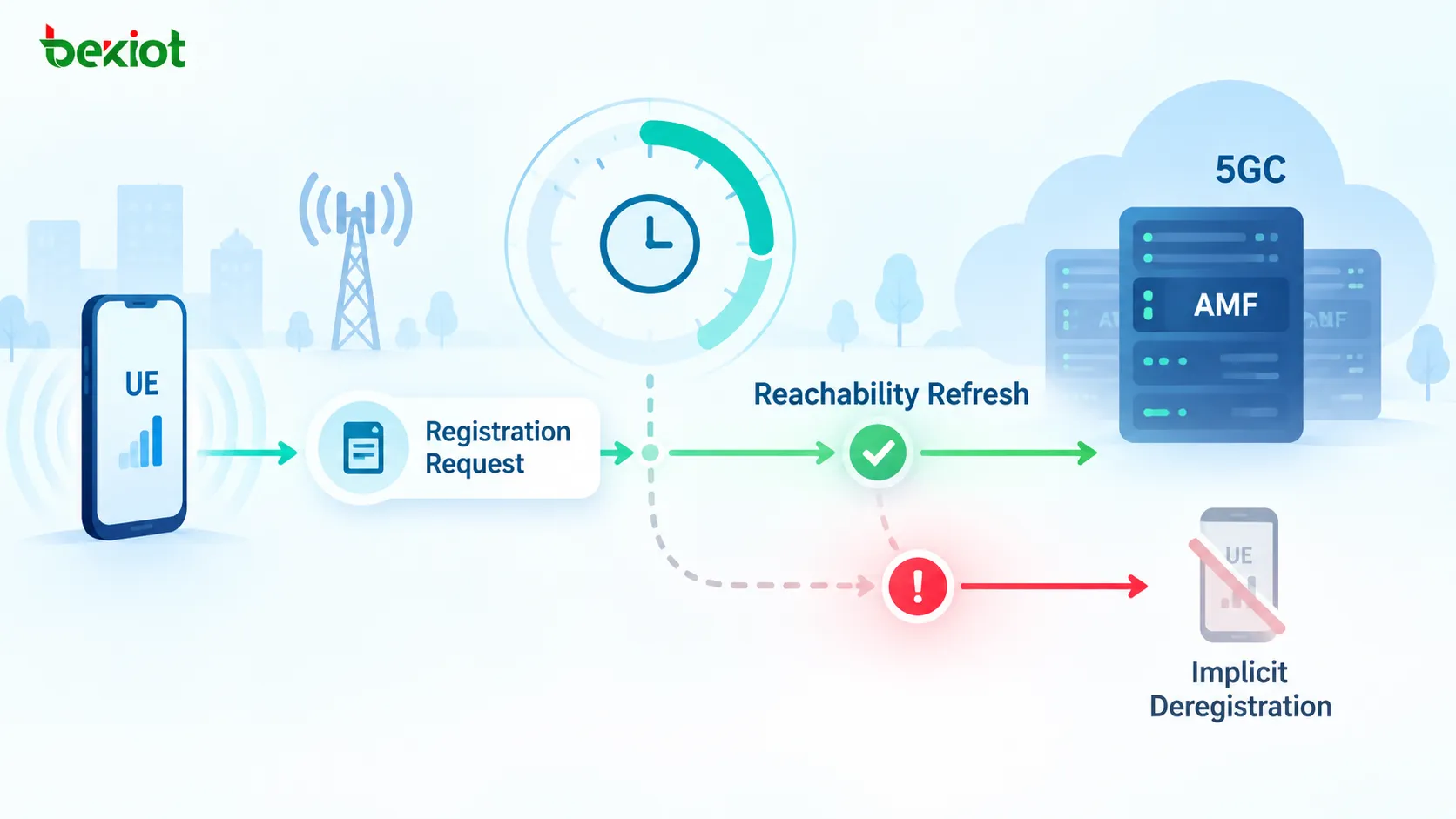
For a UE not registered for emergency services, the mobile reachable timer is longer than T3512; its default margin is 4 minutes. The AMF starts it when releasing the NAS signaling connection and stops it when NAS connectivity is established. Special modes and backoff or unavailability handling can affect the applicable supervision rules.
Expiry does not mean immediate implicit deregistration. The network starts the implicit de-registration timer; its value is network dependent, and paging/reachability handling follows the applicable rules. If that timer expires before the UE contacts the network, implicit deregistration removes the stale registration. Distinguish this network-side supervision from the UE's T3512.
A practical troubleshooting sequence
Read the T3512 value and deactivation indication actually received in Registration Accept, and identify strictly periodic support.
Reconstruct the UE's 5GMM state transitions, signaling activity, coverage and any exceptional mode or restriction before predicting expiry.
Check the Registration Request type, 5G-GUTI, security verification and the AMF's existing context; correlate any recovery or authentication steps.
Verify Registration Accept delivery and parameters, any required Registration Complete, and the AMF's reachability and implicit-deregistration timers.
FAQs
Must an update occur every 54 minutes?
No. The network-assigned value, timer deactivation, UE state and strictly periodic support determine behavior. The default value alone cannot predict timestamps in a trace.
Does normal data activity replace periodic registration?
In ordinary timer operation, entering CONNECTED stops T3512 and returning to IDLE starts it again. With strictly periodic support, the timer continues across those transitions; expiry in CONNECTED restarts it rather than forcing the idle-mode update.
Must AUSF, UDM and PCF appear in every update?
No. A valid same-AMF context can support a shorter procedure. Their absence alone is not a failure; their presence can reflect necessary security, subscription or policy processing.
Does a periodic update imply movement or a new PDU Session?
No. It can occur without movement, AMF change or new session establishment. It refreshes registration; it is not a PDU Session Establishment procedure.
Related procedures and standards
Compare the location-triggered mobility registration update and the deliberate exit in UE-initiated deregistration. These procedures answer different registration-management questions.
Timer handling and NAS conditions follow 3GPP TS 24.501 clauses 5.3.7 and 5.5.1.3 and table 10.2.1. The broader registration framework is defined in 3GPP TS 23.502 clause 4.2.2.2.2. Use the release and features supported by the deployed network.