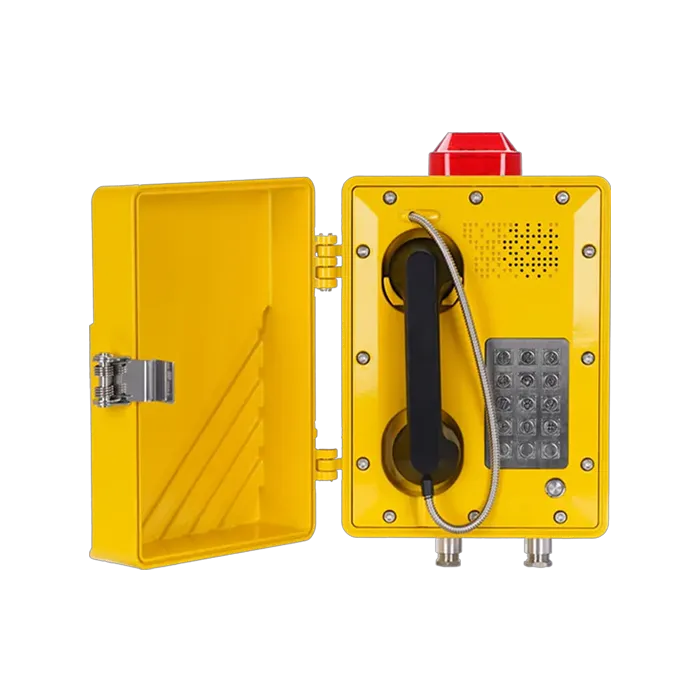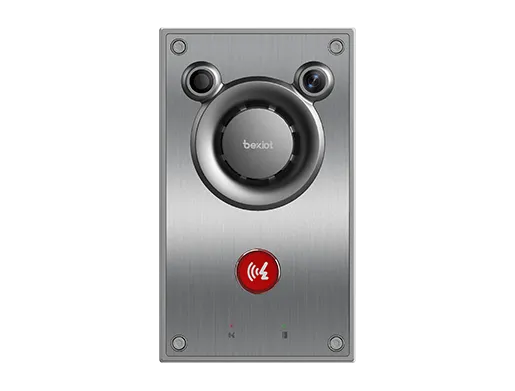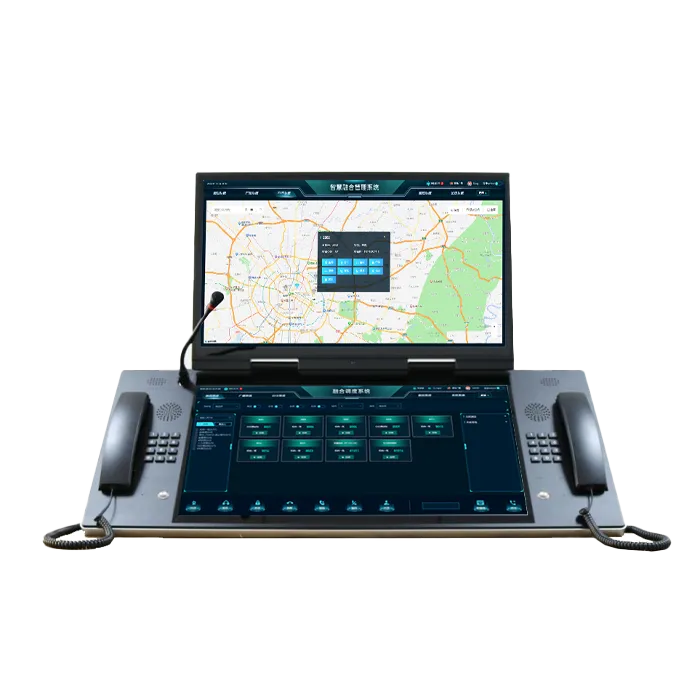
A prison phone system must make approved family communication possible without providing unrestricted access to external telephone networks. Correctional facilities need to identify the caller, verify the destination, apply permitted calling hours and maintain records of how the service is used. Those requirements become more demanding when telephone points are distributed across multiple housing units, visiting areas and detention buildings.
Becke Telcom prison telephone solutions bring rugged calling terminals together with IP PBX or softswitch call control, computer telephony integration (CTI) and the management services required for authorized calling. Depending on the project, the system can accommodate SIP terminals, existing analog phones through voice gateways, recording services and prepaid account management. The platform must implement the institution's approved policies; the equipment alone does not determine who may call, which conversations may be monitored or how charges are applied.
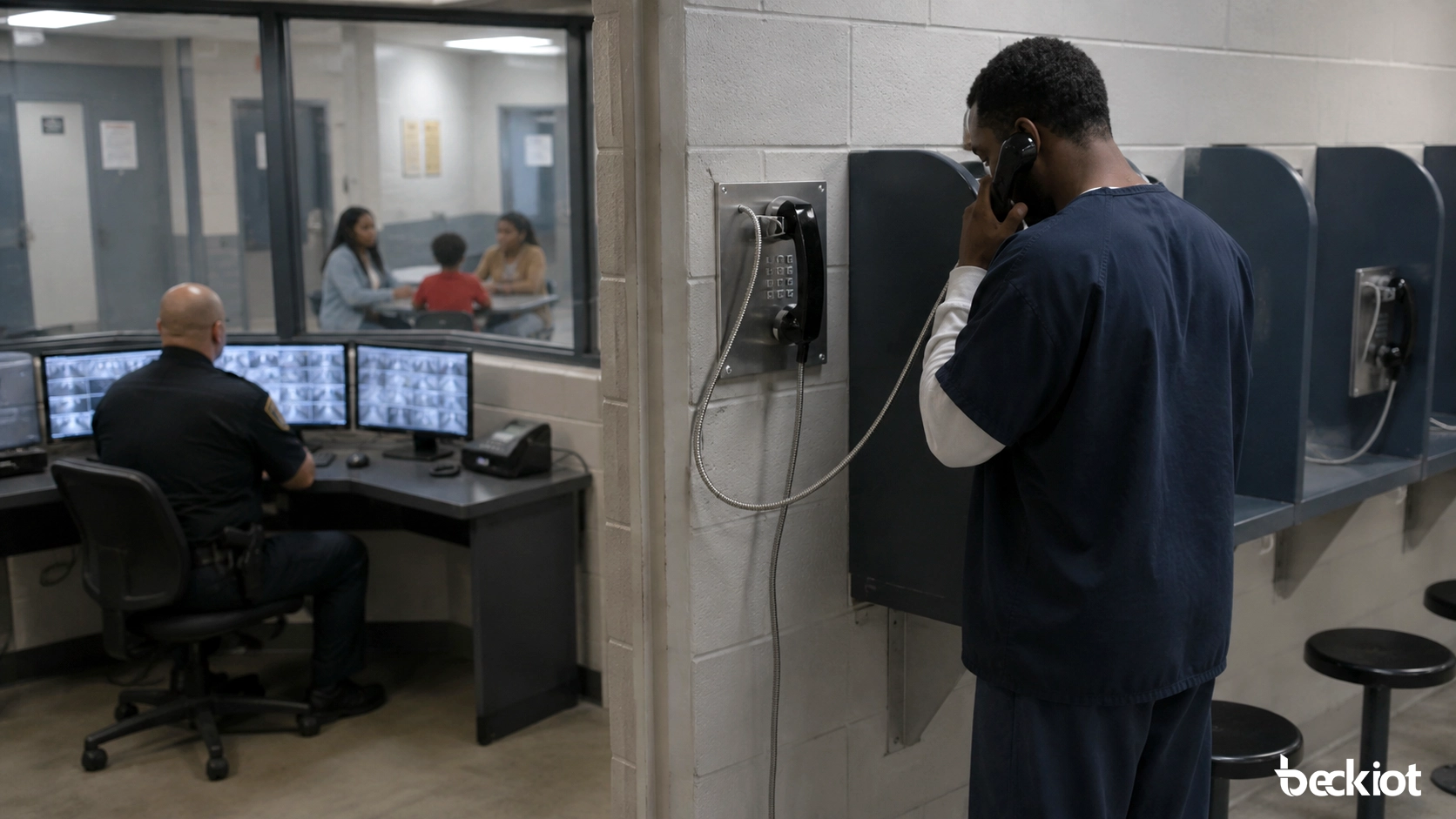
Family calling is a scheduled service rather than an ordinary open telephone extension. Before calls are enabled, the institution needs a defined process for registering eligible users, reviewing contact numbers, setting calling periods and handling requests for exceptions. Restrictions may differ by facility, housing unit, legal status or another authorized classification. These differences should be reflected in policy records and approved system settings, not left to individual telephone operators to interpret during every call.
Access control must also work in a practical environment. A calling area may have limited telephone positions, changing shift schedules and users who cannot operate an ordinary office handset or touchscreen. Durable wall-mounted terminals, protected cabling and clear identification procedures help staff provide a manageable service without granting users access to system settings or unrestricted dialing. Facilities should also plan appropriate accommodations and accessible calling procedures for people with disabilities.
A further requirement is to separate routine family calls from communications that receive special legal or confidentiality protections. Recording, monitoring, call limits and payment conditions cannot simply be applied to every conversation under one blanket rule. The operating policy must identify protected categories and the permitted procedure for connecting those calls before administrators configure the telephone platform.
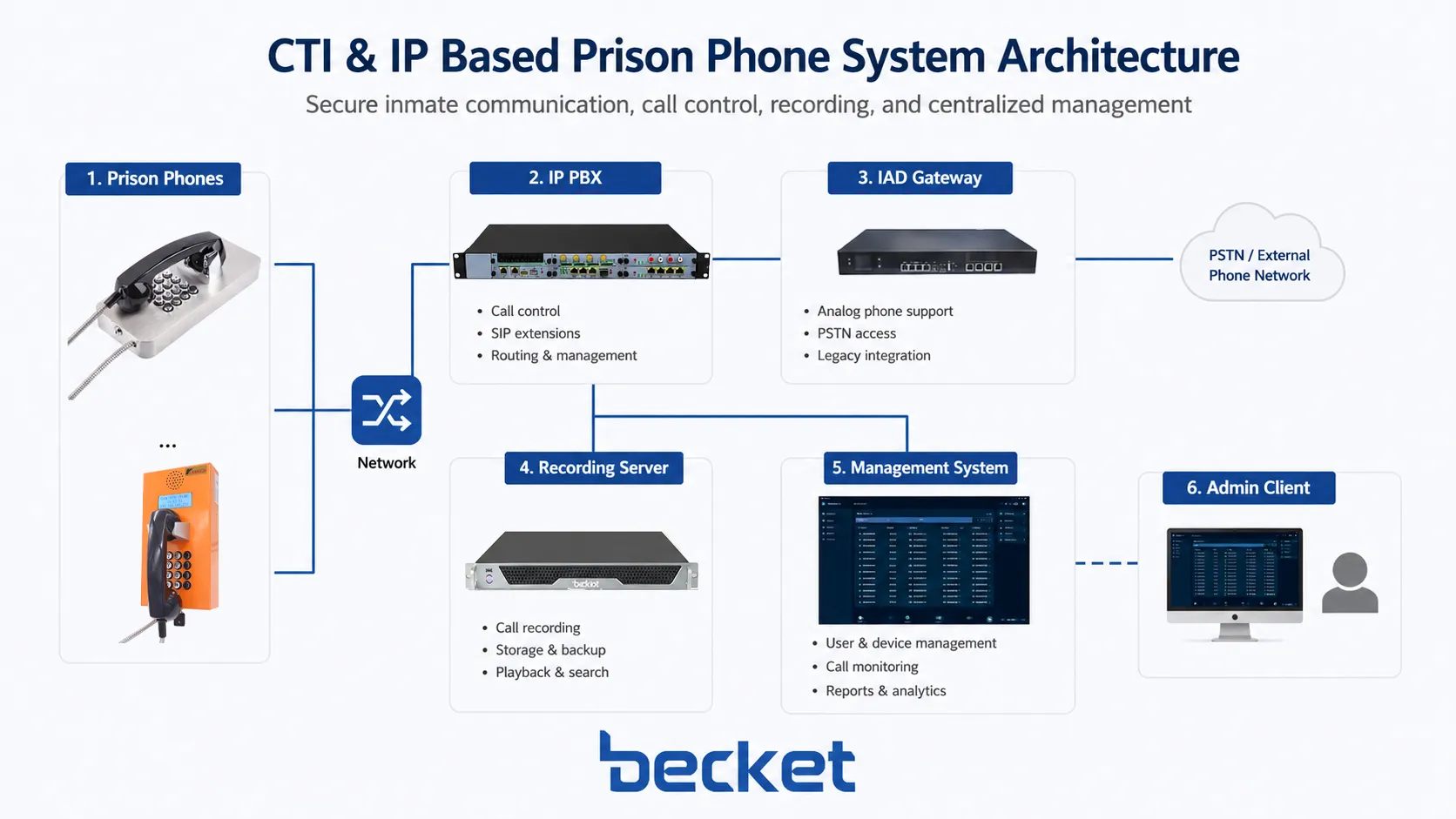
Prison telephone points may use dedicated vandal-resistant handsets, compatible SIP telephones or retained analog devices. A SIP endpoint connects through the facility IP network to the call-control platform. An analog telephone instead uses a compatible FXS port on an IAD or analog voice gateway to join the IP system. The terminal interface must be checked during equipment selection, since a rugged handset is not necessarily a native SIP device. Gateways can be installed closer to existing analog wiring where that arrangement is appropriate for the building.
The IP PBX or softswitch manages extensions, call establishment, routing and connections to approved external trunks. SIP handles signaling in supported VoIP connections, while RTP normally carries the voice media. A CTI-enabled management layer links this telephony activity with inmate profiles, approved contacts, credentials, schedules, account rules and officer workstations. When an inmate requests a call, the management application must return an authorization decision that the call-control system can enforce; keeping a contact list in a database is not sufficient by itself.
A centralized platform can manage telephone points across separate housing units, while recording, databases and administrator workstations operate as associated services. Administrators should be able to assign roles so that a housing-unit officer sees only the information needed for daily duties, while authorized security reviewers and system administrators have separately controlled responsibilities. Any integration with an existing correctional management database requires an agreed interface and a reliable process for updating inmate and contact records.
Approved outside calls leave the controlled calling platform through a suitable carrier connection. SIP trunks may connect directly to a compatible IP PBX; legacy PSTN or E1 access requires the appropriate trunk interface or media gateway. IMS-based access is possible where the operator service and system interfaces are supported. An FXS/IAD gateway serving analog inmate handsets should not be confused with a PSTN trunk gateway: the two connect different sides of the telephone architecture.
Recording, supervision and billing modules receive call events through supported platform interfaces and media paths. Their availability, capacity and level of integration depend on the software version and project configuration. These services should not be represented as functions automatically provided by every SIP telephone or voice gateway.
The service begins with an inmate profile linked to an identifier, housing location, calling privileges and approved contact list. Staff review submitted telephone numbers and record their approval status before those destinations become available for dialing. Where supported, administrators can import approved profile data in batches rather than entering every record manually. Changes to identity, housing assignment or permitted contacts should follow an authorization process that leaves an audit trail.
At the calling point, the inmate identifies themselves through an approved method such as an IC card, personal credential or another compatible authentication process. Higher-control installations may require dual-card authorization, in which an inmate presents one credential and an officer separately confirms permission. The call-control platform then checks the approved number, current calling window, remaining allowance and any account conditions relevant to that call category. Failed checks stop the connection before an external route is opened.
After authorization, the IP PBX connects the permitted destination through the configured trunk. The platform can track call start, connected duration and completion status so that configured time limits are applied consistently. When the conversation ends, it records the relevant call details, usage against the allowance and any permitted charge. Recording is initiated only for call categories and users for which recording is authorized. A failed, unanswered or rejected call should have a distinguishable result rather than being reported as a completed conversation.
Staff also need exception procedures for circumstances such as a suspended calling point, an incorrectly recorded contact number, a failed identity check or a protected-call request. The facility's approval process determines how an exception is handled; system administrators should not bypass the approved calling policy simply to complete a connection.
Calling rules can be assigned to individuals or policy groups, depending on the management software. A facility may use a defined daily schedule, limit the number of connected calls within a week or month, or configure maximum durations such as 10, 20, 30 or 60 minutes where its policy permits. These are examples of configurable values, not universal prison calling rules. Staff should also be able to distinguish a connected call from an unsuccessful attempt when calculating allowances.
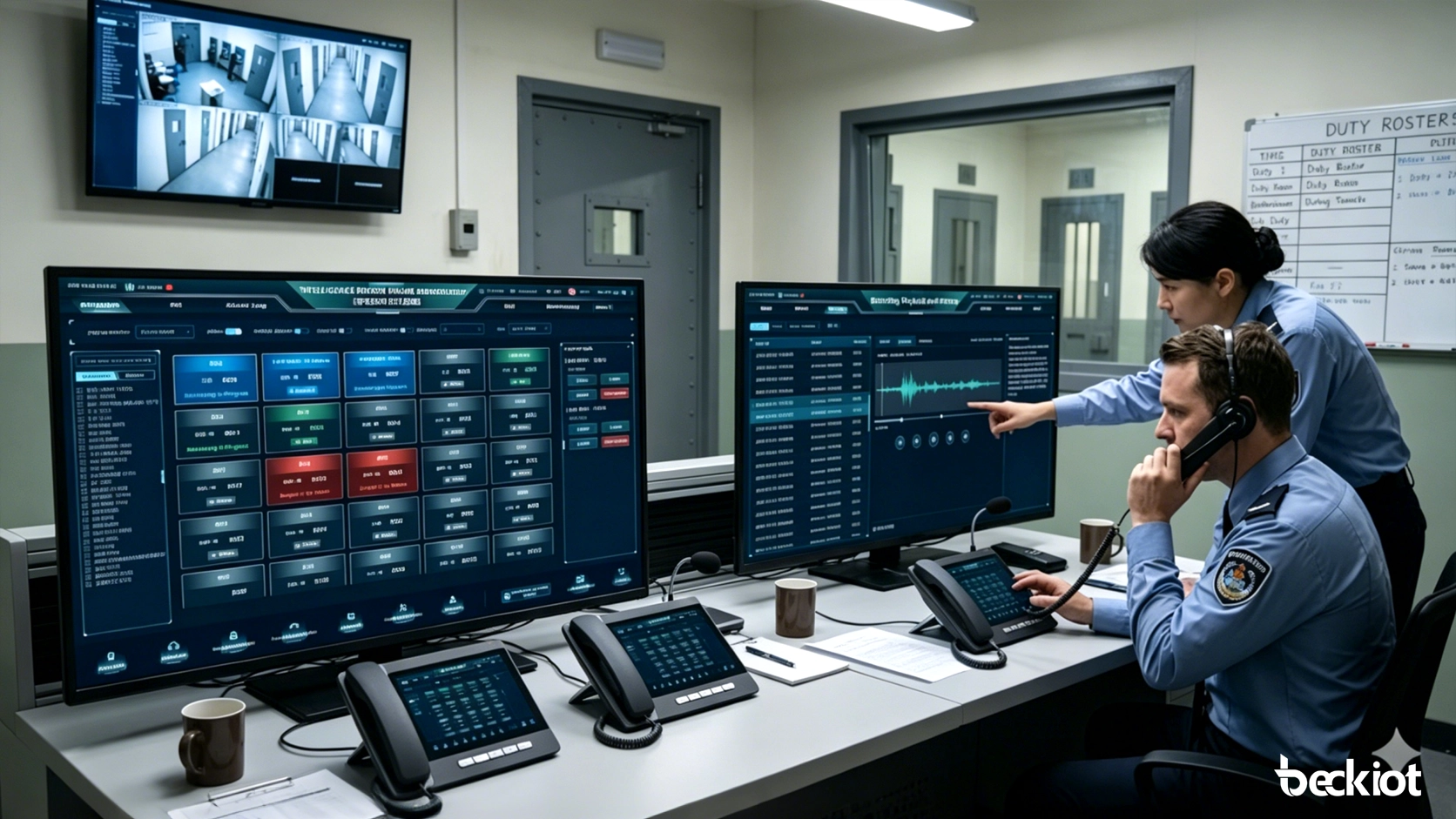
For ordinary calls that may lawfully be monitored, the solution can support recording, authorized live listening and subsequent playback review when the required platform functions are available. Recordings should be linked to relevant call metadata, protected from unauthorized access and retained only in accordance with applicable requirements and the institution's approved schedule. Review activity, including searches, playback and exports, should be logged so sensitive communications are not exposed through unrestricted administrator access.
Protected communications require a separate, expressly authorized procedure. In jurisdictions where confidential attorney calls or other privileged conversations must remain unmonitored, the platform and operating process must prevent those calls from entering ordinary recording or live-listening workflows. The distinction between a routine call to an approved attorney number and a formally arranged privileged call may also matter. These rules must be established by the institution's legal and operational authorities, not inferred from the recipient's number alone.
During a permitted monitored call, an authorized officer may need to issue a warning or terminate the session in response to a documented rule violation. Such controls must be restricted to the appropriate role and recorded with the operator identity, action and time. A call review interface can help staff locate relevant sessions by date, terminal, authorized user or contact, but it should not grant broad access to every recording simply because the user can view call statistics.
Some correctional facilities operate paid calling services, while others use different funding arrangements. Where prepaid billing is permitted and selected for the project, the management platform can maintain account balances, recharge transactions, charging rules and itemized call statements. Charges may be calculated from connected duration, applicable billing increments and an approved destination category. All tariffs, fees and account restrictions must follow the regulations and contractual conditions governing the service; technical configurability is not permission to impose a charge.
An authorized administrator should be able to reconcile opening balances, deposits, call deductions, adjustments and remaining credit. A failed or unanswered call should not automatically be treated as a billable completed call. The system also needs a documented process for disputed entries, account changes and transfers between housing units. A balance-check function at the terminal can be useful if supported, but its visibility and handling must fit the calling-area procedure.
Operational reporting should answer practical questions: how heavily calling points are used, which periods experience queues, how many requests fail authorization, whether trunk capacity is adequate and how account transactions reconcile. Reports may be grouped by time range, calling area or approved administrative category and exported by permitted users. Security records and financial information should be governed by different access rights where their purposes differ.
Calling rooms, designated housing-unit points, detention areas and visitor communication spaces have different installation requirements. Project planning should confirm the number of simultaneous callers, physical supervision arrangements, terminal protection, handset mounting, cable routing and accessibility before equipment locations are finalized. Central equipment rooms can host the IP PBX, policy-management services, database and recording infrastructure, while suitable local gateways serve areas retaining analog telephones.
The calling network should be separated from unrelated user networks with appropriate routing, firewall policy, endpoint provisioning and administrative access controls. SIP and RTP paths need to be tested through the actual network, including the carrier edge. Recording storage capacity, backup procedures, time synchronization and available power resilience should be sized for the installation. If the primary external trunk or management server becomes unavailable, the fallback procedure must preserve authorization controls rather than opening unrestricted calls.
Acceptance testing should use representative user accounts and approved contact lists to verify successful calls, blocked destinations, invalid credentials, dual-card approval where configured, duration and frequency limits, tariff calculations, termination actions and permitted record searches. Protected-call handling must be tested separately to confirm that relevant restrictions on monitoring and recording are effective. The team should also verify analog gateway behavior, external trunk recovery, concurrent calling capacity and the handling of interrupted sessions.
A final handover should identify who manages contact approvals, credentials, call-policy changes, billing adjustments, record access and software maintenance. Becke Telcom can provide appropriate rugged communication terminals and voice gateway options for these projects; the included CTI, recording, billing and integration functions should be confirmed against the selected platform and contractual scope. For a closer examination of correctional communication policy and user workflows, see the inmate family calling system guide.
Staff should be able to invalidate the lost credential, verify the person's identity through an approved procedure and issue a replacement without exposing the account to another user. The timing and administrator responsible for the change should be recorded.
They can when the management platform links permissions to the inmate profile rather than to a single telephone. The receiving unit's local schedules and security policies still need to be checked before access is enabled at the new location.
The calling design should assess the restrictions available from the IP PBX, carrier and selected management platform. Rules for call transfer, conferencing and external forwarding vary between services, so prohibited call paths must be tested with the actual trunk provider rather than assumed to be blocked.
Local authentication and call control may operate on a protected facility network without a general internet connection. External calling still requires the applicable carrier route, which may be delivered over a dedicated SIP service, a suitable telephone gateway or another approved connection.
The handover should include documented system configuration, authorization roles, contact-approval procedures, tariff settings where applicable, audit-log retention rules and a controlled method for exporting permitted operational records. Credentials and sensitive recordings should be transferred through approved access-management procedures rather than shared informally.