

Mission-critical communications refers to the voice, alerting and information services that organizations depend on when a communication failure could endanger people, interrupt essential operations or prevent an effective response. The defining requirement is not a particular radio, telephone or software platform. It is the ability to deliver the right communication to the right users within the time and conditions required by a critical operation.
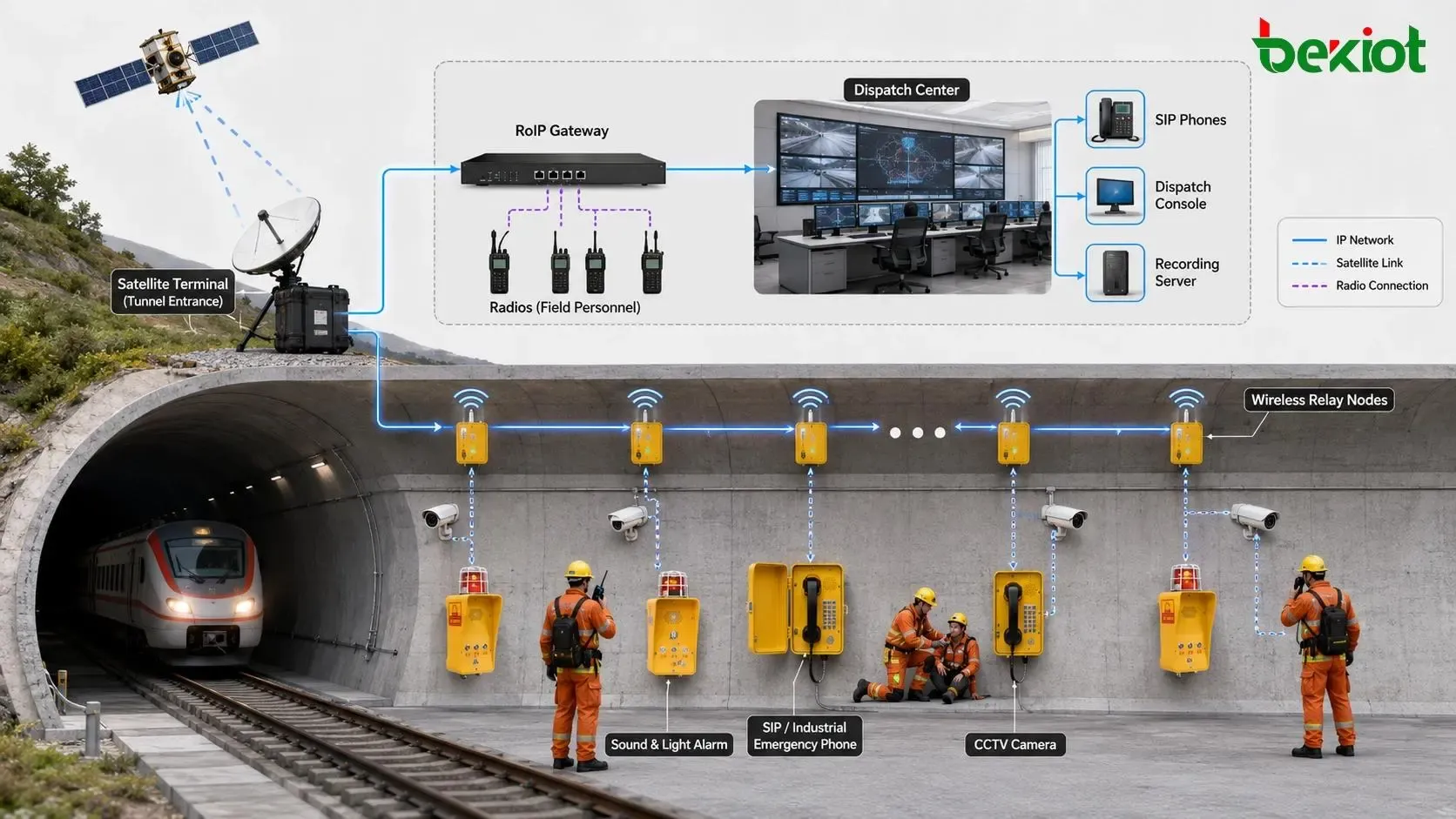
These systems can connect professional radio users, industrial SIP telephones, emergency help points, public address and general alarm equipment, dispatch consoles and mobile field teams. A control room may need to receive a distress call, speak with the caller, assign responders and issue a separate warning to the affected area. Each function has different timing, coverage and reliability requirements, even when several functions share a common management platform.

Operational Requirements
Criticality Depends on the Consequence of Failure
A missed administrative call and an unanswered emergency help-point call do not carry the same risk. In a railway tunnel, the loss of a passenger assistance link can delay incident reporting. At a chemical plant, a failed evacuation announcement can leave personnel without instructions. For a dispatch organization, an unavailable talk group may prevent a field team from receiving a change in response priorities. The system requirements follow these operational consequences rather than the label attached to the equipment.
Planning identifies the users and areas involved, the maximum acceptable interruption for each service, the response procedure after a call or alarm, and the communication method available when the preferred one fails. A system supporting routine operations and emergency response may assign different service levels to the two. High availability does not mean that no fault can ever occur; it means that the architecture and operating procedures are designed around defined failure conditions and recovery objectives.
Timeliness, Coverage and Message Intelligibility
A communication path is only useful if it can be accessed and understood at the point of need. Radio coverage must be assessed along actual working routes, including tunnels, basements, stairwells and remote outdoor areas. Fixed telephones and help points need to be placed where people can reach them. Paging loudspeakers must provide intelligible instructions in the presence of machinery noise, reverberation and other site conditions.
Call establishment time, audio delay, group-call access and alert delivery are also operational requirements. Their acceptable values depend on the service, applicable standard and project specification. A system may pass a simple connectivity test while still being unsuitable for a noisy production area or a time-sensitive evacuation procedure.
System Architecture
Endpoints and Access Networks
The endpoint layer includes portable and vehicle radios, dispatch consoles, industrial IP telephones, emergency intercoms, public help points, paging stations and alarm output devices. These endpoints may use professional radio infrastructure, private or public cellular networks, wired Ethernet, fiber links or dedicated communication circuits. The access network determines where the user can connect and which failures can interrupt the path.
Sites often combine networks because their users have different mobility and operating requirements. A portable radio supports a moving maintenance crew; a fixed help point offers a known reporting location; a SIP telephone gives a control room or equipment area a stable voice endpoint. Selecting the correct mix requires more than putting every device on the same IP network. Coverage, power, physical protection and dependency on central equipment must also be considered.
Call Control, Signaling and Media
In a SIP-based system, signaling registers contacts where required and establishes, modifies and terminates sessions. RFC 3261, sections 10, 13 and 15, specifies registration, session initiation and termination; it does not specify a site emergency response procedure. An IP PBX or SIP server applies configured routing and permissions, while speech normally travels as RTP media over a separately negotiated IP path. Media may flow directly between compatible endpoints or through a relay, recorder, conference resource or gateway. Successful registration alone does not prove two-way audio or correct emergency routing.
Professional radio systems use access and group-control procedures that differ from SIP call handling. At an interconnection point, a radio gateway exchanges selected audio between the radio subsystem and IP dispatch or telephony, while each network retains its own control functions. Identifying the signaling and media routes at this boundary helps isolate one-way audio, excessive delay and dropped connections.
Dispatch and Alarm Coordination
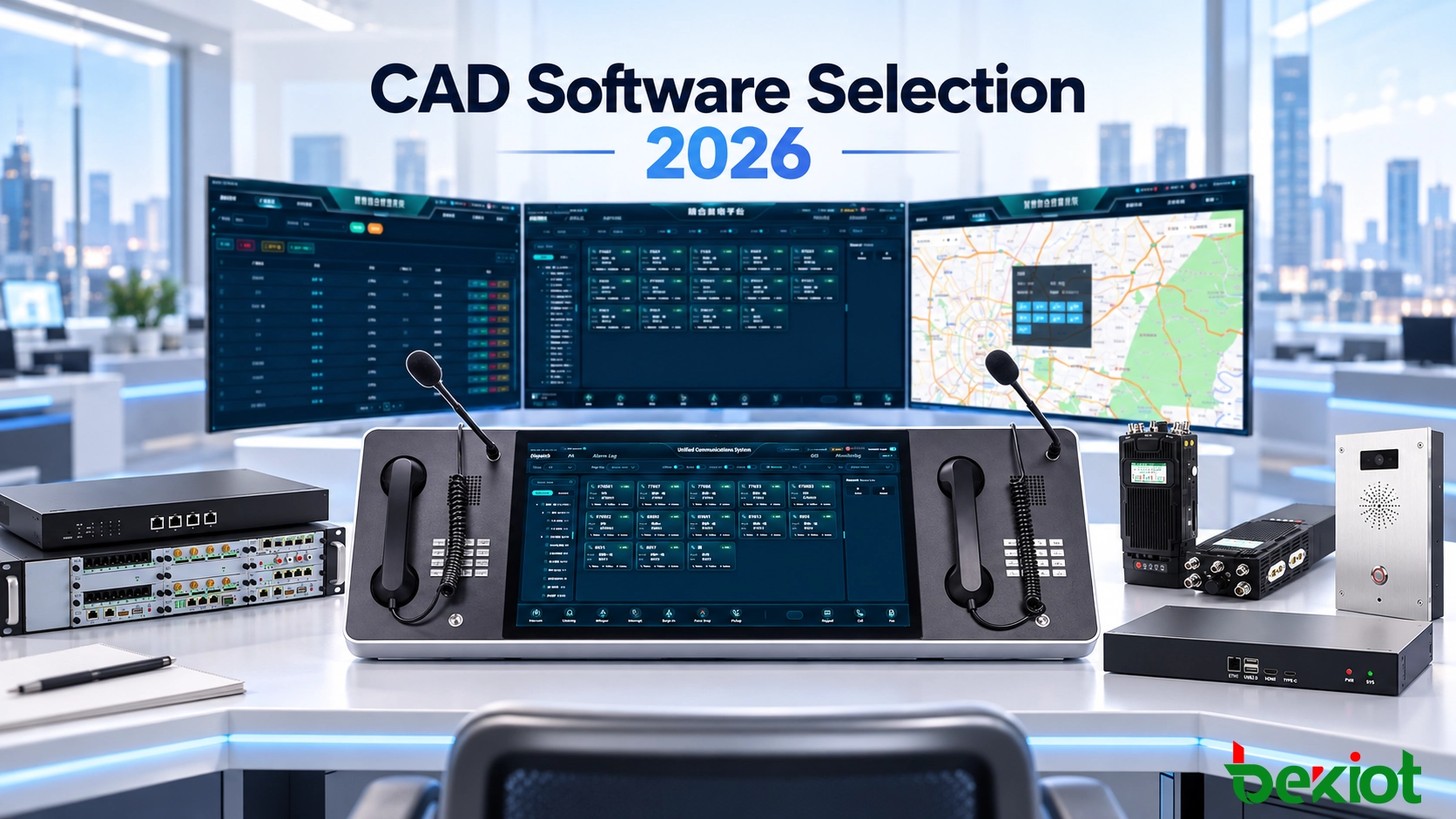
The control layer of a command and dispatch system gives authorized operators the ability to receive incident reports, select users or groups, establish voice connections and direct messages to the required areas. A dispatch console may also present call records, equipment status, location information or linked video where those functions are provided by the connected systems. An alarm or safety-control event can initiate a communication workflow, but the alarm-detection function and the communication-delivery function retain distinct responsibilities.
Public address and general alarm systems serve a different purpose from two-way dispatch: they deliver warnings and instructions to defined acoustic zones. Integration can link an incident event to a paging request, but the design must preserve the appropriate alarm priorities, zone selection and supervised outputs. The communication architecture is consequently a set of cooperating services, not simply a collection of devices registered to one server.
Priority Calls, Group Communication and Alerts
Call Precedence and Network Resources
Urgent traffic must be handled differently from routine conversations. Depending on the platform, an emergency call may enter a priority queue, interrupt a lower-priority announcement, obtain a reserved dispatch resource or trigger a predefined escalation group. The authorization to initiate these actions should follow operational roles: not every endpoint needs permission to override site-wide audio or interrupt an active response channel.
Application-level priority and network-level service assurance are separate mechanisms. A dispatch server may rank calls correctly while the underlying network still experiences congestion, packet loss or radio-channel exhaustion. End-to-end behavior depends on capacity, access policies and supported resource controls. For standardized MCX services, 3GPP TS 22.280 V18.5.0, section 5.6, defines service priority requirements, including emergency communication. Those requirements apply within their specified MCX scope; they are not evidence that a particular deployment implements every function. A high SIP application priority does not, by itself, reserve bandwidth across the IP route.
Talk Groups and Multi-Party Coordination
One-to-many communication allows a dispatcher or field leader to reach a response team without establishing separate calls to every member. Radio talk groups, group PTT, conferencing and selective paging all provide forms of collective communication, but their access rules and behavior differ. A PTT group normally needs floor control so that competing transmissions are managed, while an audio conference may allow multiple participants to speak simultaneously.
Group design follows responsibilities and incident geography. Separate groups can be maintained for maintenance, security and emergency response, with controlled interconnection when an incident crosses organizational boundaries. Membership changes, group selection errors, channel occupancy and gateway delays need to be considered because a technically connected group is not necessarily a well-coordinated one.
Alerts, Zones and Response Confirmation
Warning delivery may follow a sequence of event detection, operator or automatic validation, message selection, zone assignment, transmission and status logging. A refinery may need an audible warning in an affected process area while responders receive a separate two-way dispatch call. A transport facility may send passenger instructions over public address while providing an emergency telephone connection for personnel at the incident location.
A system log showing that a paging command was sent is not proof that every person heard or understood the message. Delivery supervision, amplifier and loudspeaker monitoring, acoustic measurements and operational drills address different parts of that question. Acknowledgment is similarly service-specific: a responder may confirm receipt by voice or data, whereas a one-way loudspeaker cannot confirm human comprehension.
Reliability, Redundancy and Failover
Removing Single Points of Failure
Resilience comes from identifying shared dependencies and deciding which of them need protection. A redundant call server offers limited benefit if both servers use the same unprotected switch, power supply or network uplink. Dual communication links are less independent if they travel through the same vulnerable cable route. The architecture may therefore include geographically separated controllers, alternate transport, redundant switching, monitored endpoint links and power sources chosen according to the required service level.
Control-plane availability and media-path availability must be assessed separately. A standby platform may accept new SIP calls after a controller failure without maintaining the audio of every active call. Likewise, a redundant network route may restore connectivity while requiring a radio or phone to reconnect. Recovery behavior must be defined at the level of each critical service, not described simply as automatic backup.
Local Operation During Network Outages
Local fallback limits the impact of a wide-area or central-platform failure. In some professional radio systems, suitably configured terminals can continue with direct-mode or local-site communication when trunked infrastructure is unavailable. A distributed paging system may retain local announcement capability if its site controller and audio path are independent of the failed central link. An IP telephone can continue making specified local calls only if the required registration, routing and media resources remain available.
These are design-dependent capabilities, not automatic characteristics of radio, SIP or broadband technology. A site emergency procedure should identify exactly which groups, extensions, zones and communication functions continue in each failure state. It should also provide a manual alternative where a technical fallback cannot meet the operational requirement.
Power, Fault Detection and Recovery
Backup power must cover the complete communication chain: control servers, network switches, radio infrastructure, gateways, amplifiers and critical field endpoints. A UPS serving only the central controller cannot keep a distant speaker or radio base station working if that equipment loses power. Monitoring should distinguish between an unreachable terminal, a failed audio output, a broken transport link and an unavailable control service so that the response team can identify what has actually been lost.
Failover testing includes detecting the fault, transferring or re-establishing service through surviving resources, and returning to normal operation without introducing conflicting routes or priorities. Restoration should also confirm that monitoring, call routing and the authorized operator functions work as intended after the affected equipment returns to service.
Security and Operational Control
Critical communication privileges must remain available to authorized personnel without exposing emergency functions to general users. Authentication and role-based authorization can restrict who may initiate site-wide paging, bridge response groups, change emergency routes or access sensitive incident records. Signaling and media protection should be applied according to the technology and the operational security requirements.
An outage procedure must also address dependence on central identity, policy and logging services. Where local credentials, cached permissions or autonomous site controls are supported, their permitted scope and audit handling should be defined before a backhaul failure occurs. Controlled configuration changes, protected backups and restoration checks help prevent an unauthorized change or corrupted setting from becoming a communication outage.
Technologies and Interoperability
Professional Radio and Broadband Services
P25 and TETRA are professional radio technologies associated with demanding dispatch and public-safety operations, supporting functions such as managed group communication and emergency procedures in suitable configurations. DMR is widely used in industrial and commercial radio networks and can support operationally critical communication, but its capabilities and resilience vary with system design. Technology selection also involves licensed spectrum, coverage, capacity, terminal compatibility and the organization's operating procedures.
Broadband communications extend the available services to video, location and structured data. Within the 3GPP framework, Mission Critical Services (often called MCX) include Mission Critical Push to Talk (MCPTT), Mission Critical Video (MCVideo) and Mission Critical Data (MCData). These are defined service families with their own procedures and requirements. The broader term mission-critical communications is not synonymous with MCX, and a commercial push-to-talk application does not become standards-based MCPTT simply because it uses LTE or 5G. The service distinction is explored further in What Is MCX in Mission-Critical Communication?.
SIP, PAGA and Cross-System Interfaces
Industrial SIP telephones, emergency intercoms and IP dispatch systems can provide important fixed-site communication functions. Public address and general alarm (PAGA) systems address warning distribution, evacuation instructions and supervised audio outputs. These technologies can be components of a mission-critical architecture when the overall system provides the required resilience and operating behavior; SIP interoperability by itself is not a certification of mission-critical performance.
Interworking gateways can connect selected radio groups with SIP or dispatch resources, while platform interfaces exchange supported alarms, call events and status data. A bridged audio path does not necessarily carry radio unit identity, emergency status, talk-permission control, encryption context or network priority semantics. Interoperability testing must therefore establish which information survives the boundary, how group membership and authentication are mapped, and which system retains control when a link fails. The migration from commercial push-to-talk services toward standardized broadband systems is covered in From PoC to MCX.
Deployment Scenarios and Acceptance Testing
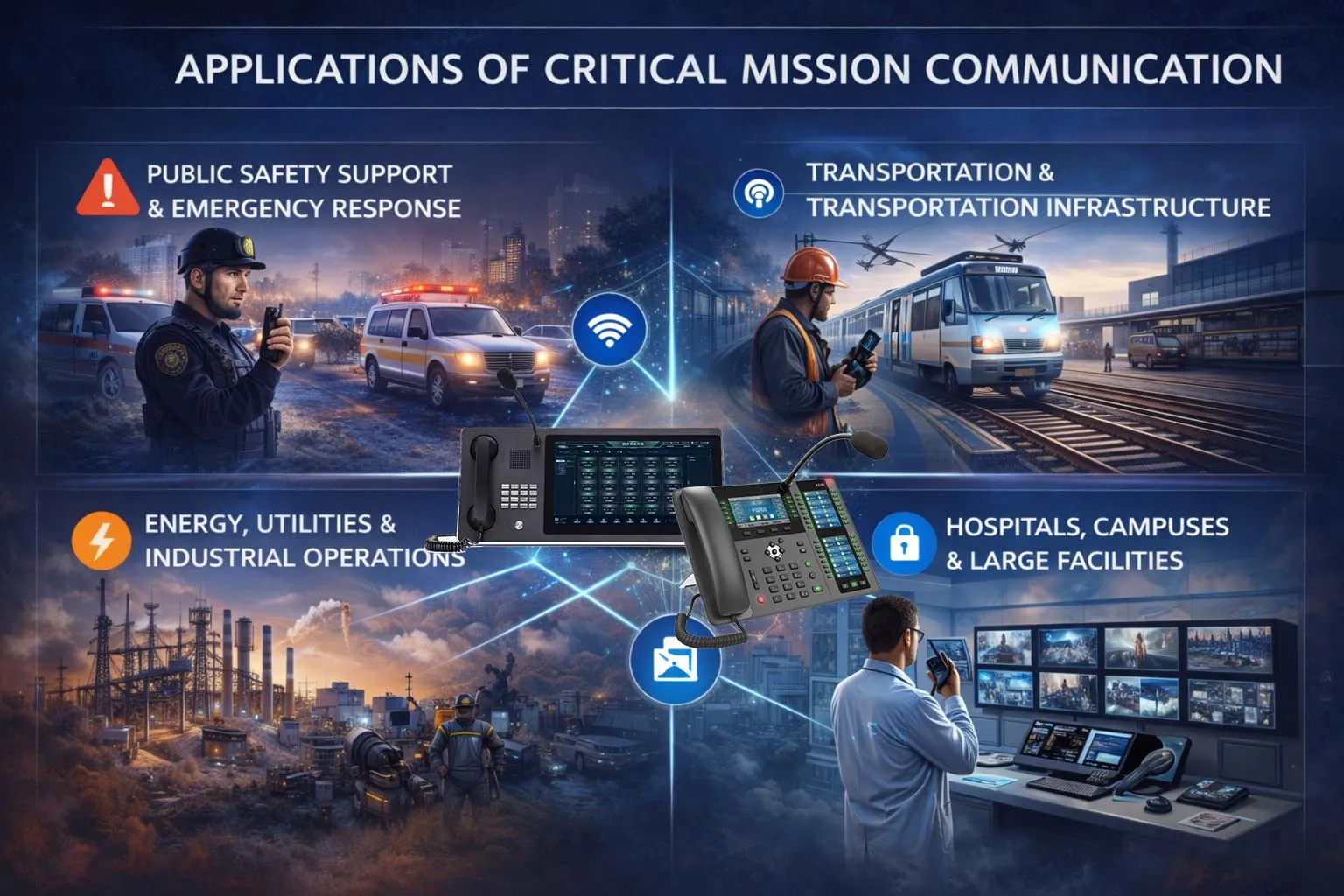
Public Safety and Transport Infrastructure
Emergency responders rely on group communications and dispatch coordination to allocate teams, provide instructions and report changing conditions. Railways, metros, airports, highways and tunnels add fixed-location help points, control-room telephones, public announcements and communications for distributed maintenance staff. The network and endpoint design must account for moving users, difficult propagation conditions, public access points and the need to address passengers separately from responders.
Energy, Industry and Large Facilities
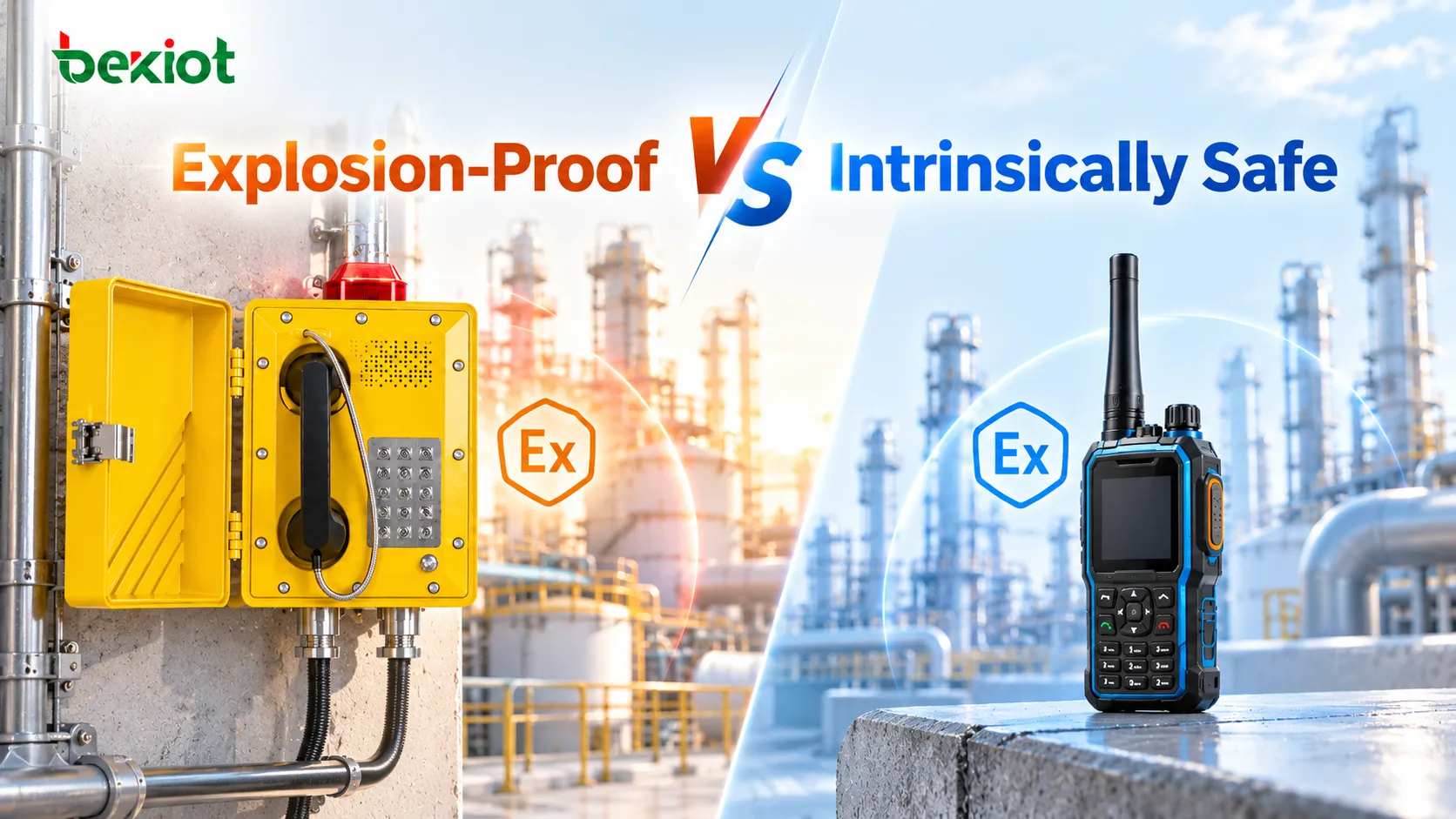
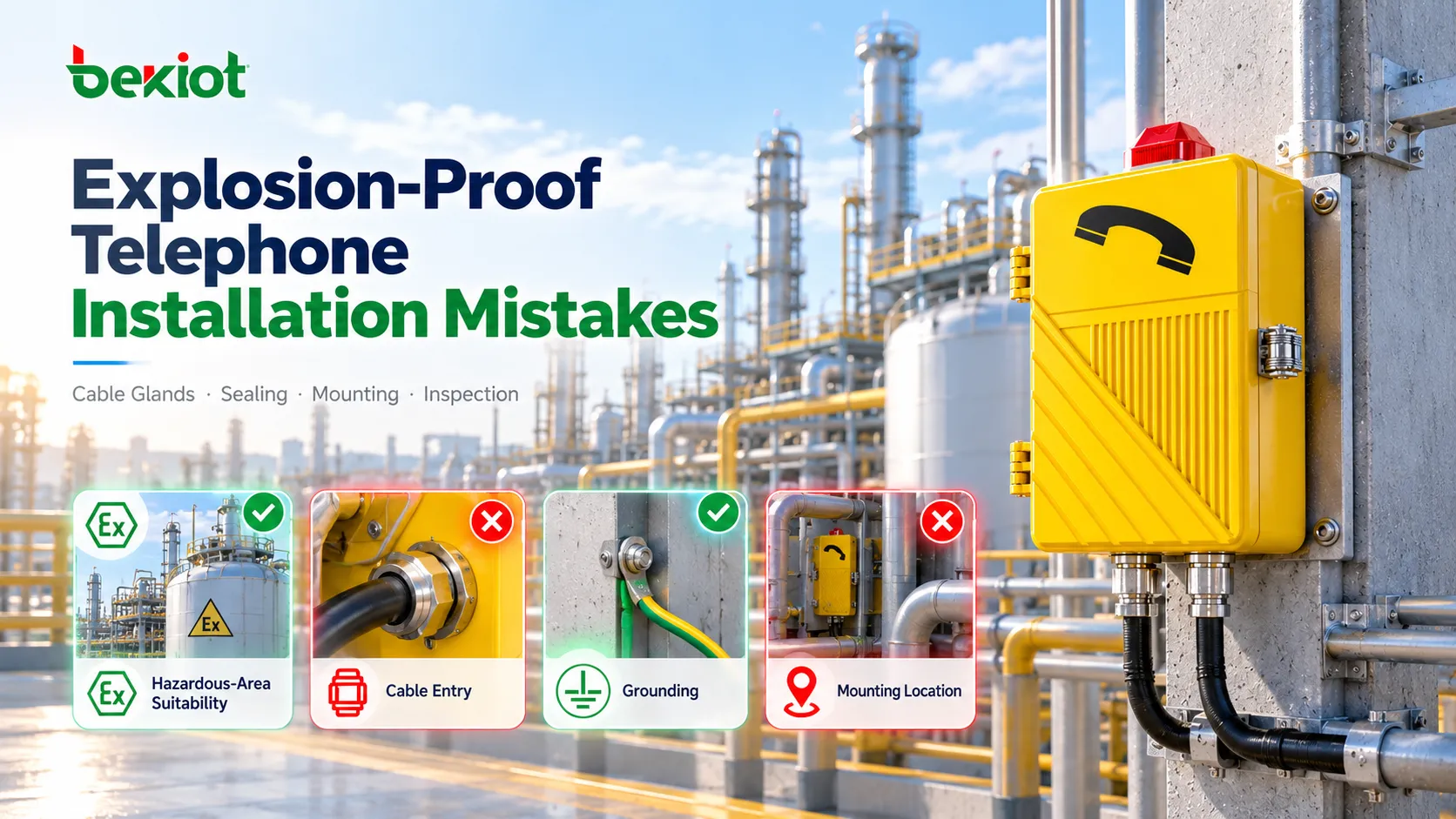
Refineries, offshore installations, power networks, water utilities and chemical processing sites combine routine operations with emergency procedures that may require explosion-protected devices, industrial intercoms, radio dispatch and PAGA equipment. Hospitals, campuses and large public facilities have different physical hazards but still require controlled alerting, staff coordination and reliable assistance points. The common design question is which communication functions must continue during abnormal site conditions, not whether every facility uses the same equipment.
Testing the Complete Communication Path
Acceptance testing needs to follow the actual route from the reporting user to the receiving operator or warning zone. Bench tests of individual devices are useful, but they cannot establish the performance of a complete network and response procedure. The following table is an engineering planning checklist, not a universal certification test. An approved test plan should include normal operation, high traffic, background noise and controlled simulations of equipment, power and transport failures, with safeguards for services that remain in use.
| Test Area | What to Verify |
|---|---|
| Call setup and access | Emergency and routine call success, connection time, assigned destinations and access rights. |
| Voice and paging intelligibility | Speech clarity at actual operating points, including noisy areas and representative announcement zones. |
| Priority and group handling | Emergency precedence, permitted interruption, group membership, floor control and simultaneous traffic. |
| Media and coverage | End-to-end audio paths, latency, packet loss or radio coverage under expected load and mobility conditions. |
| Failover and local fallback | Services retained, calls interrupted, reconnection behavior and communication available during planned fault scenarios. |
| Power and supervision | Backup operating duration, equipment alarms, fault reporting and restoration procedures. |
| Security and incident records | Authorized emergency actions, audit trails, configuration recovery and protected access to dispatch resources. |
Acceptance criteria are established for the project's operational risks and applicable requirements rather than copied from a generic performance claim. A useful test record identifies the initial conditions, affected users, observed behavior, interruption duration, recovery action and any functions that remained unavailable. This makes it possible to distinguish a resilient communication design from one that merely includes redundant components on a drawing.
FAQs
When Is 3GPP MCX Appropriate?
MCX is relevant when an organization requires standardized broadband mission-critical push-to-talk, video or data services and has access to a network and service platform that support the required 3GPP functions. Selection should examine coverage, service priority, user and group management, interworking with existing radio systems, device support and responsibility for operating the service. A fixed industrial site with different communication needs may instead rely on a combination of professional radio, SIP telephony and emergency paging.
Which SIP Functions Should Be Tested for Emergency Calling?
Tests should start at the field telephone or intercom and end at the intended answering point. They need to verify the emergency dialing method, routing destination, two-way audio, authorized call precedence, operator availability and recovery after the loss of a server or network link. Where the site uses a local fallback route, test it with the central service deliberately disconnected rather than inferring that it will work from a successful routine call.
Can Ongoing Calls Survive Network Failover?
It depends on the failed component and the way call signaling and media are handled. An active call with an independent media path may continue through a call-server fault, while a call whose media passes through a failed relay may disconnect. A standby controller that accepts new calls does not necessarily retain the state of an established session. Live-call failover tests should record whether audio continues, pauses, reconnects or requires users to place a new call.
How Is Emergency Call Priority Tested Under Network Congestion?
In an isolated test environment or an approved maintenance window, generate representative routine traffic, then initiate emergency calls, group PTT requests or high-priority announcements through the actual access and control equipment. Observe call admission, setup time, authorized interruption, talk-permission behavior and intelligibility while monitoring packet loss, link occupancy or radio-channel use. Compare results with defined criteria and repeat the agreed backup scenarios. A priority indication on the dispatcher screen is not sufficient evidence of end-to-end performance.