

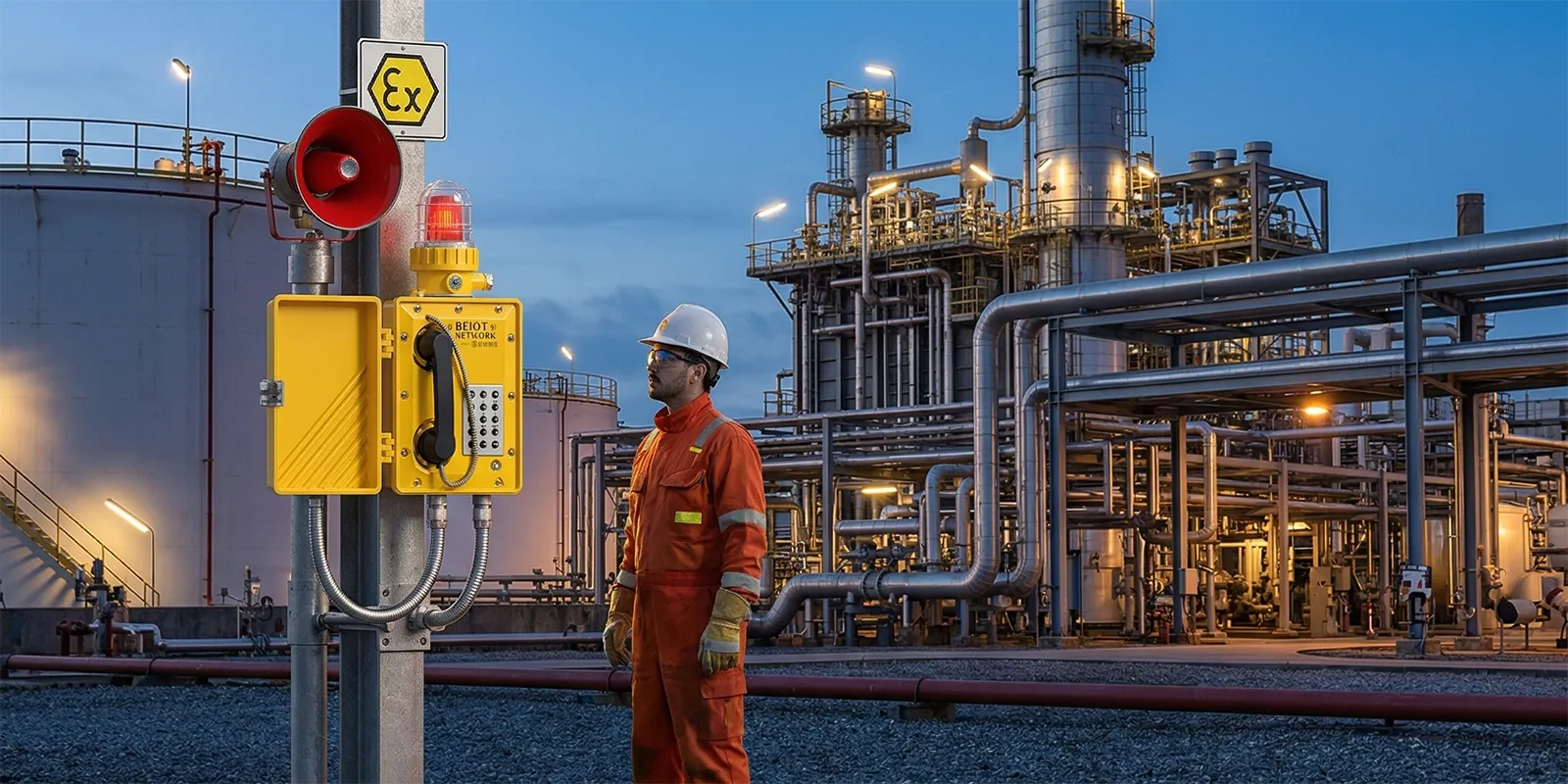
Communication in a refinery, gas processing plant, offshore platform or other hazardous industrial site has a different set of requirements from ordinary office telephony. The telephone must still provide clear and dependable voice communication, but it also has to be suitable for an environment where flammable gas, vapor or combustible dust may be present.
An explosion-proof telephone is designed for this type of operating environment. Installed at fixed and identifiable locations, it gives field personnel a direct way to contact a control room, maintenance team, dispatcher or emergency response position without relying entirely on mobile coverage or handheld devices.
Its value, however, is not determined by a heavy enclosure alone. Hazardous-area suitability, certification, environmental protection, acoustic performance and compatibility with the site's communication network all need to be considered together. A telephone can be rugged enough for outdoor use and still be inappropriate for a classified hazardous location.
Hazardous-Area Communication and Equipment Requirements
An explosion-proof telephone is a fixed industrial communication terminal intended for locations where ordinary electrical equipment may present an unacceptable ignition risk. Depending on the site, the surrounding atmosphere may contain flammable gases, combustible vapors or hazardous dust.
The design therefore goes beyond weather resistance. Enclosure construction, sealing, electrical protection, material selection, cable entry, surface temperature and the applicable hazardous-area approval all form part of the equipment's suitability for a particular installation.
Product Introduction: EX-BH621 Explosion-Proof Telephone
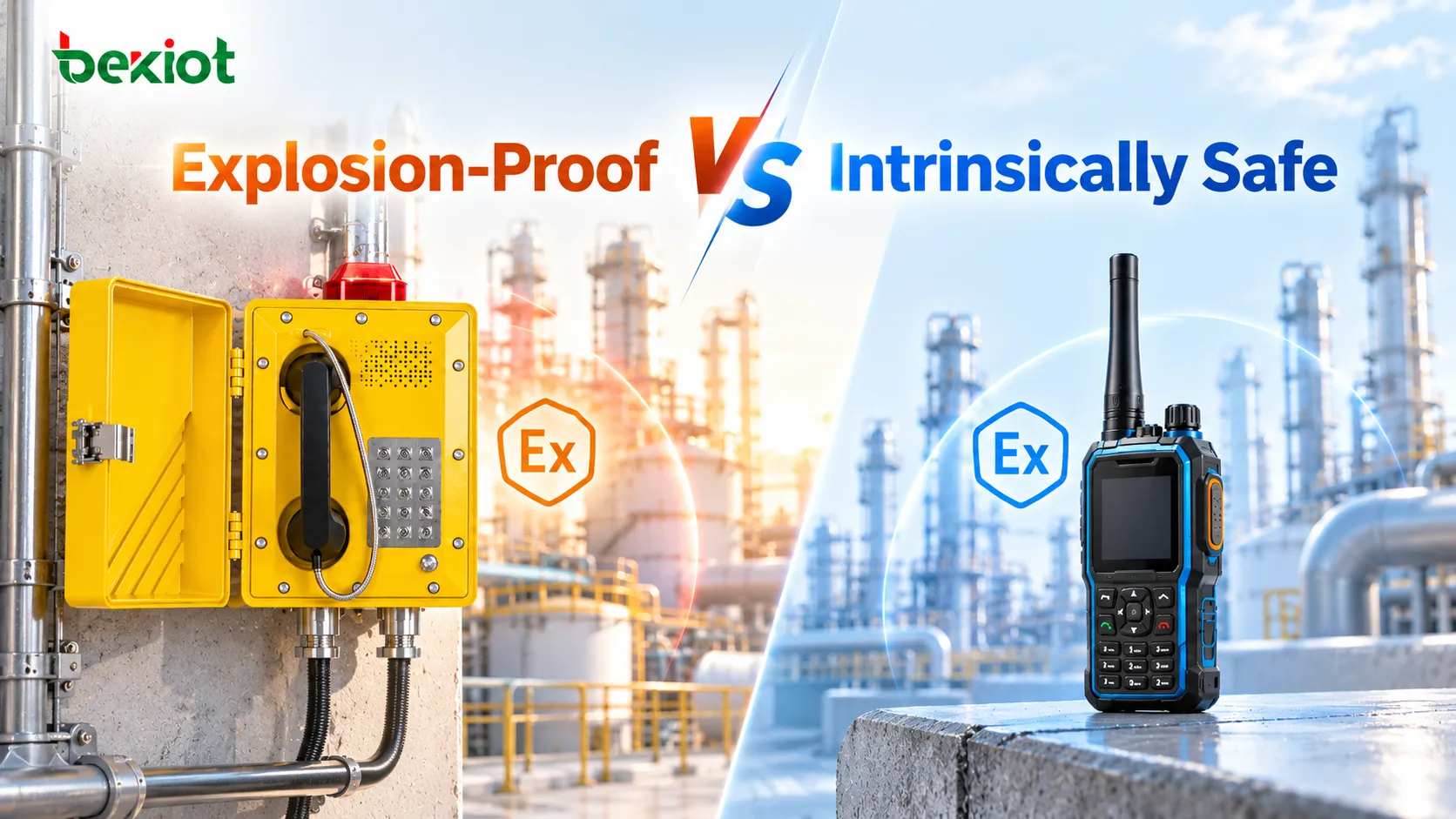
This distinction is important because the terms rugged and explosion-proof describe different requirements. A rugged industrial telephone may provide excellent resistance to water, dust, impact or corrosion, but those characteristics alone do not establish suitability for an explosive atmosphere.
The same applies to IP ratings. IP66 or IP67 can be important for outdoor service, washdown areas and dusty environments, but an ingress-protection rating does not replace the explosion-protection design and certification required by the classified area.
Project teams should therefore begin with the hazardous-area classification and applicable compliance requirements rather than selecting a telephone by enclosure appearance, IP rating or price and checking certification afterwards.
Industrial Applications and Installation Locations
Explosion-proof telephones support both emergency response and routine operations. Their fixed position is particularly useful in areas where personnel need a communication point that remains easy to locate during an abnormal event.
During an emergency, a worker may use the telephone to report a leak, equipment failure, fire, injury or another hazardous condition directly to a control room or emergency response position. In an integrated system, the call may also be associated with recording, dispatch, paging, alarm handling or other control-room workflows.
Day-to-day use is just as important. Maintenance technicians can report equipment conditions, operators can request instructions, inspection teams can coordinate with supervisors, and personnel working away from the control room can obtain approval without leaving the work area.
Typical applications include:
Oil refineries and petrochemical processing units;
Gas processing plants, LNG facilities and pipeline stations;
Offshore platforms, drilling areas and marine terminals;
Mines, tunnels and underground utility environments;
Power, energy and industrial production facilities;
Pump stations, compressor areas, loading bays and isolated equipment zones.
In many of these locations, mobile communication is useful but should not automatically be treated as a replacement for fixed communication points. Cellular or radio coverage can vary, batteries can be depleted, and workers may not always carry a suitable handheld terminal. A fixed telephone provides a known communication location that can be incorporated into operating and emergency procedures.
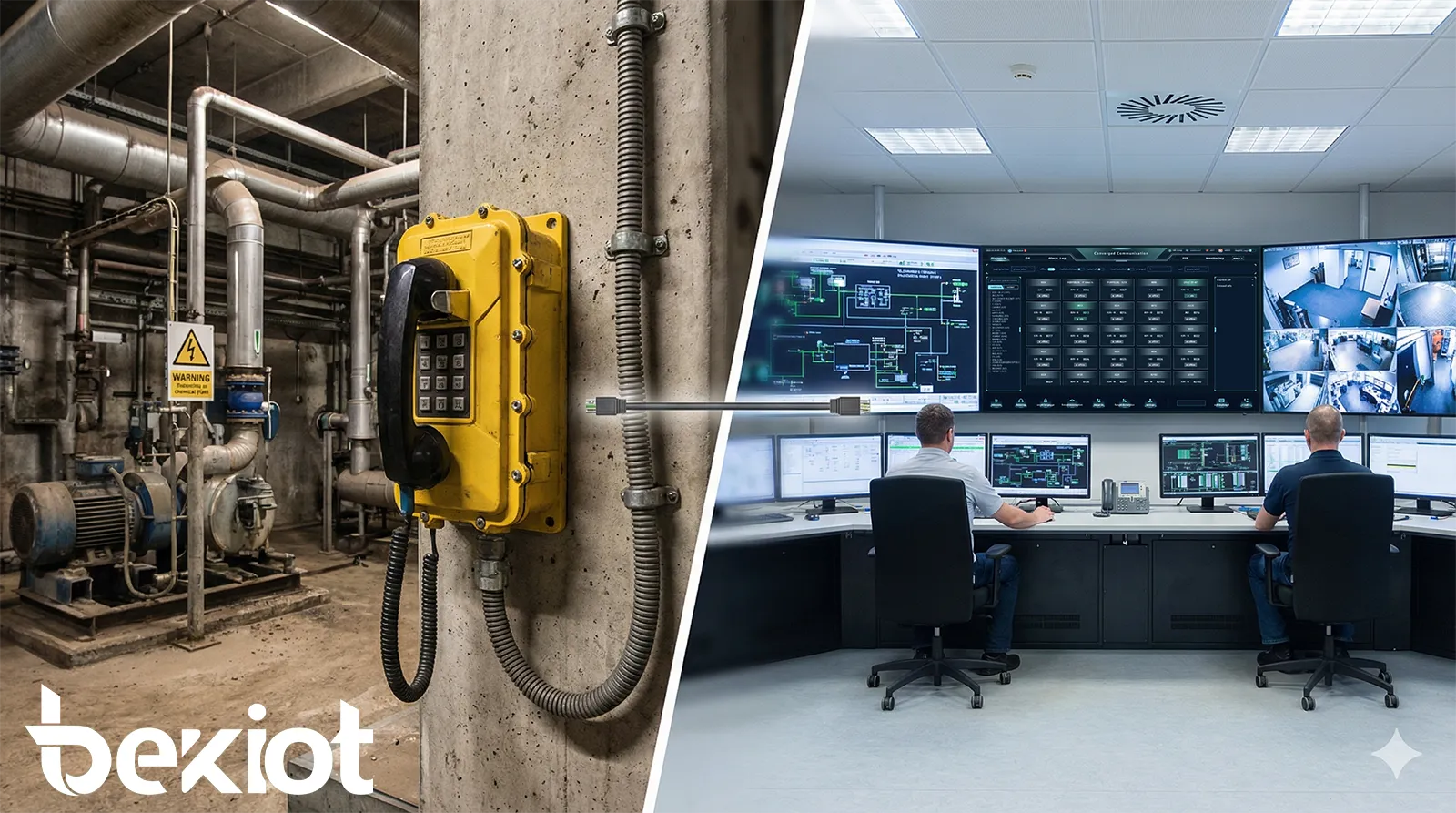
Reliability, Acoustic Performance and System Integration
Hazardous-area approval establishes only part of the requirement. The telephone also has to remain practical in the environment where people actually use it.
Industrial communication points may be exposed to rain, dust, large temperature changes, vibration, corrosive atmospheres and continuous mechanical noise. A telephone that meets the required certification but cannot be heard beside a compressor or operated while wearing gloves may still be a poor choice for the site.
Acoustic performance should therefore be reviewed together with installation conditions. High ringing volume, suitable receiver level, noise-resistant microphone design, external speaker support or visual call indication may be useful where background noise is high.
Physical construction also varies by environment. A coastal terminal exposed to salt spray, an offshore deck, a process area and an underground tunnel may all require hazardous-area telephones, but their preferred materials, corrosion protection, mounting methods and environmental ratings can differ.
Communication architecture is another part of the decision. Modern explosion-proof telephones may be supplied for analog or SIP/IP systems.
An analog model can remain appropriate where the site already operates a conventional PABX or copper telephone network. A SIP explosion-proof telephone is better aligned with IP-based architectures where telephony is integrated with an IP PBX, industrial intercom, paging, recording or dispatch platform.
SIP also makes it easier to treat the hazardous-area telephone as part of a wider communication system rather than as an isolated endpoint. A fixed telephone can have a defined extension, location name and call route, allowing the control room to identify where a call originates and apply appropriate routing or priority rules.
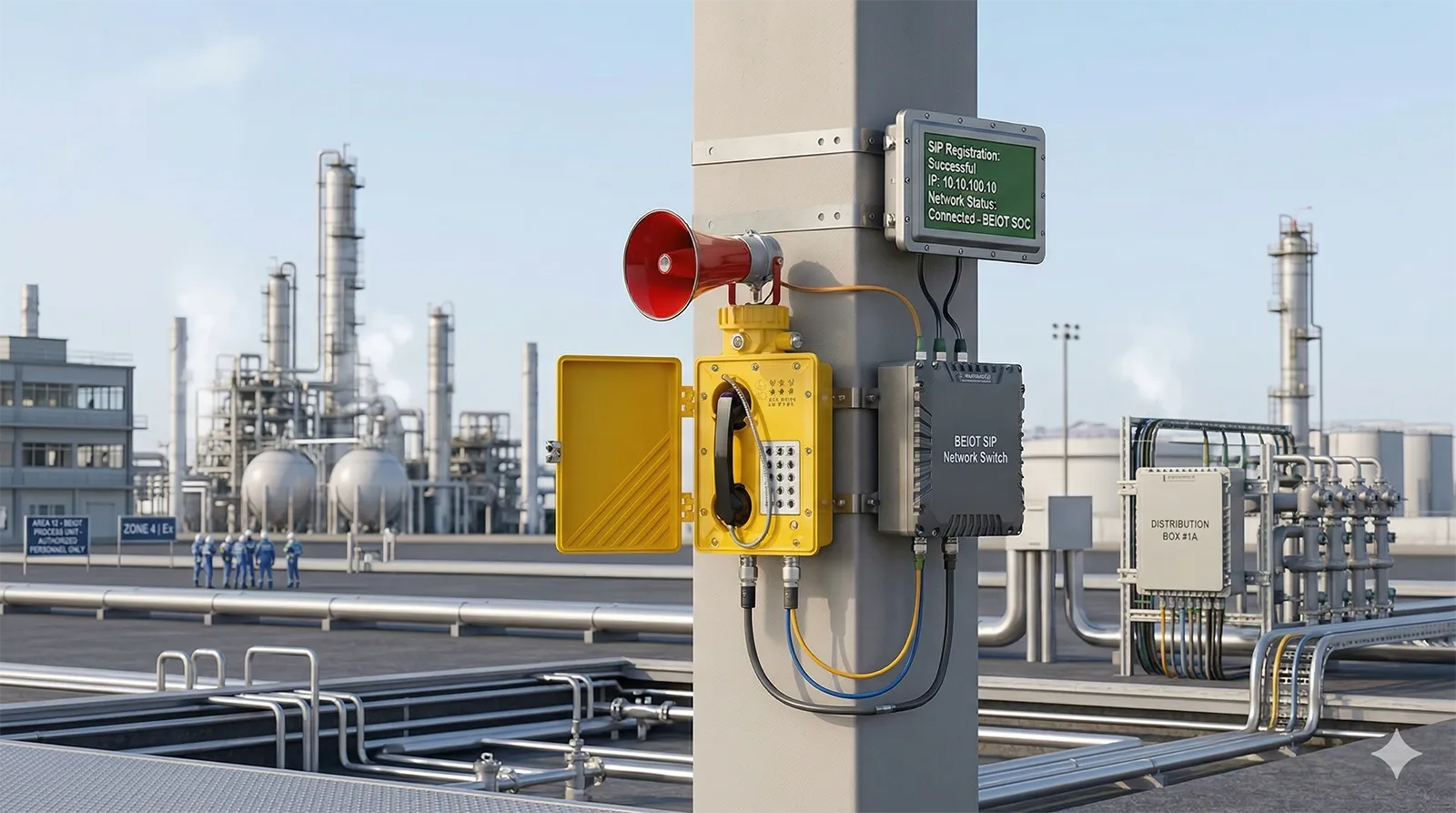
How to Select an Explosion-Proof Telephone
A practical selection process should start with the site rather than with a product catalog. The model is selected only after the installation conditions and communication requirements are understood.
Confirm the Hazardous-Area Classification
Identify exactly where the telephone will be installed and what hazardous conditions apply to that location. The required equipment depends on the site's classification, the type of hazardous atmosphere and the project standards in use.
Engineering, safety and compliance personnel should confirm these conditions before procurement. A model suitable for one classified area should not automatically be assumed suitable for another.
Verify Certification and Product Marking
The selected model should match the certification and compliance requirements specified for the project. This check should include the exact product variant rather than relying only on a general product-family description.
For projects covering several countries or project specifications, certification requirements should be resolved early because they can affect model selection, documentation and final approval.
Match Analog or SIP Connectivity to the Existing Network
The communication interface should fit the wider site architecture. Existing analog infrastructure may favor a conventional telephone interface, while new IP-based sites may benefit from SIP endpoints connected to an IP PBX or dispatch system.
The decision should also consider future expansion. A site planning to integrate paging, intercom, recording, radio gateways or centralized dispatch may gain more flexibility from an IP-based architecture.
Check Environmental and Mechanical Suitability
Review ingress protection, corrosion resistance, ambient temperature, mounting method, handset construction, keypad operation and maintenance access against the actual installation environment.
A product that meets the hazardous-area requirement still needs to survive the physical environment throughout its service life.
Evaluate Real Operating Conditions
The final check is usability. Workers should be able to locate the telephone quickly, operate it with the required protective equipment and clearly hear the other party in the site's normal noise conditions.
Depending on the workflow, the project may also require hotline calling, programmable keys, hands-free communication, visual indicators, external loudspeakers or links to alarm and dispatch functions.
Common Selection Errors and Project Verification
Many purchasing problems begin when one specification is used as a substitute for a complete engineering review.
Choosing by price alone is one example. A lower-cost telephone can become an expensive decision if it does not match the classified area, cannot integrate with the installed PBX or performs poorly in the site's acoustic environment.
Using IP66 or IP67 as evidence of explosion protection is another common error. These ratings address ingress of dust and water. They do not by themselves establish that the telephone is suitable for a hazardous atmosphere.
Projects can also run into problems when they focus entirely on certification and ignore the rest of the system. A compliant telephone that cannot be monitored, routed, recorded or maintained within the existing communication architecture may create a new isolated subsystem.
Before placing an order, a project team can reduce most early-stage errors by confirming four points in sequence:
The hazardous-area requirements match the selected model;
The required certification and product marking are available for the exact configuration;
The analog or SIP interface is compatible with the wider communication system;
The enclosure, acoustics, mounting and operating features are suitable for the actual site.
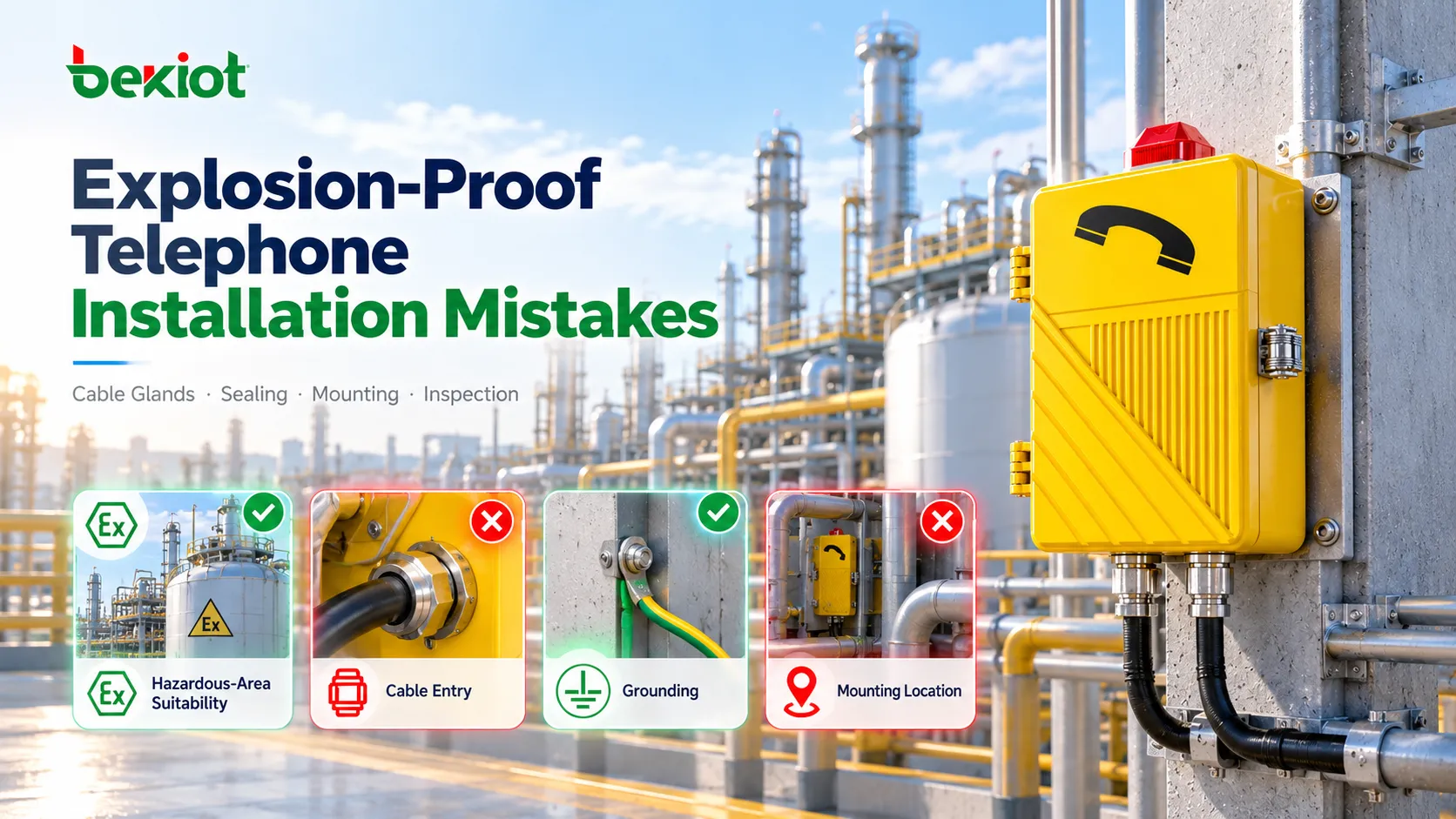
Incoming inspection and commissioning should repeat these checks against the physical equipment. The installed model, nameplate, interface type and mounting arrangement should match the approved project documents.
Communication testing should also go further than confirming dial tone. The telephone should be tested from its real installation point for incoming and outgoing calls, ringing audibility, speech clarity and any configured hotline, paging, recording or dispatch functions.
The most suitable explosion-proof telephone is therefore not simply the model with the strongest enclosure or the longest specification sheet. It is the model that meets the hazardous-area requirements, remains usable under real site conditions and fits the communication architecture that personnel depend on every day.
For larger industrial projects, hazardous-area telephones can also be planned together with SIP communication, industrial paging, recording, radio interworking and centralized dispatch so that emergency and routine communication use the same coordinated operating framework.
FAQ
What Is the Difference Between an Explosion-Proof Telephone and a Rugged Industrial Telephone?
A rugged industrial telephone is primarily designed to withstand physical conditions such as dust, water, impact or corrosion. An explosion-proof telephone is intended for a classified hazardous environment where flammable gas, vapor or combustible dust may create an ignition risk. Rugged construction alone does not make a telephone suitable for a hazardous area.
Where Are Explosion-Proof Telephones Commonly Installed?
Typical locations include refineries, petrochemical plants, gas processing facilities, offshore platforms, mines, tunnels, energy sites, marine terminals, pump stations, compressor areas and other industrial locations that require fixed hazardous-area communication.
Can an Explosion-Proof Telephone Use SIP?
Yes. SIP-based explosion-proof telephones can connect to IP PBX, industrial intercom, paging and dispatch platforms. This makes them suitable for sites moving from isolated analog telephony toward integrated IP communication.
Is IP66 or IP67 Enough for a Hazardous Area?
No. An IP rating describes protection against dust and water ingress. Hazardous-area suitability depends on the appropriate explosion-protection design, certification and matching of the equipment to the classified installation environment.
What Should Be Confirmed Before Purchasing an Explosion-Proof Telephone?
Confirm the hazardous-area classification, certification requirements, communication interface, environmental conditions and the functions required in daily operation. These factors should be reviewed together rather than selecting the telephone from one specification alone.