

An explosion-proof SIP phone is a hazardous area communication terminal that combines SIP-based network calling with compliant protective design, suitable for locations where flammable gases, vapors, mists, or combustible dust are present. Simply put, it is an industrial-grade IP phone that can not only connect to a SIP server, IP PBX, or dispatch platform, but also operate safely in environments where an ignition source could cause serious safety consequences.
It is this dual nature that establishes the core value of this product category. An ordinary office IP phone supports SIP registration, HD voice, and network-based call management, but it cannot adapt to classified industrial hazardous areas. An explosion-proof SIP phone must balance communication performance with hazardous area protection standards. The device requires an enclosure, circuits, materials, cable glands, and a certification scheme suited to the installation environment, while delivering stable and reliable voice communication over the IP network.
Related product:EX-BH621
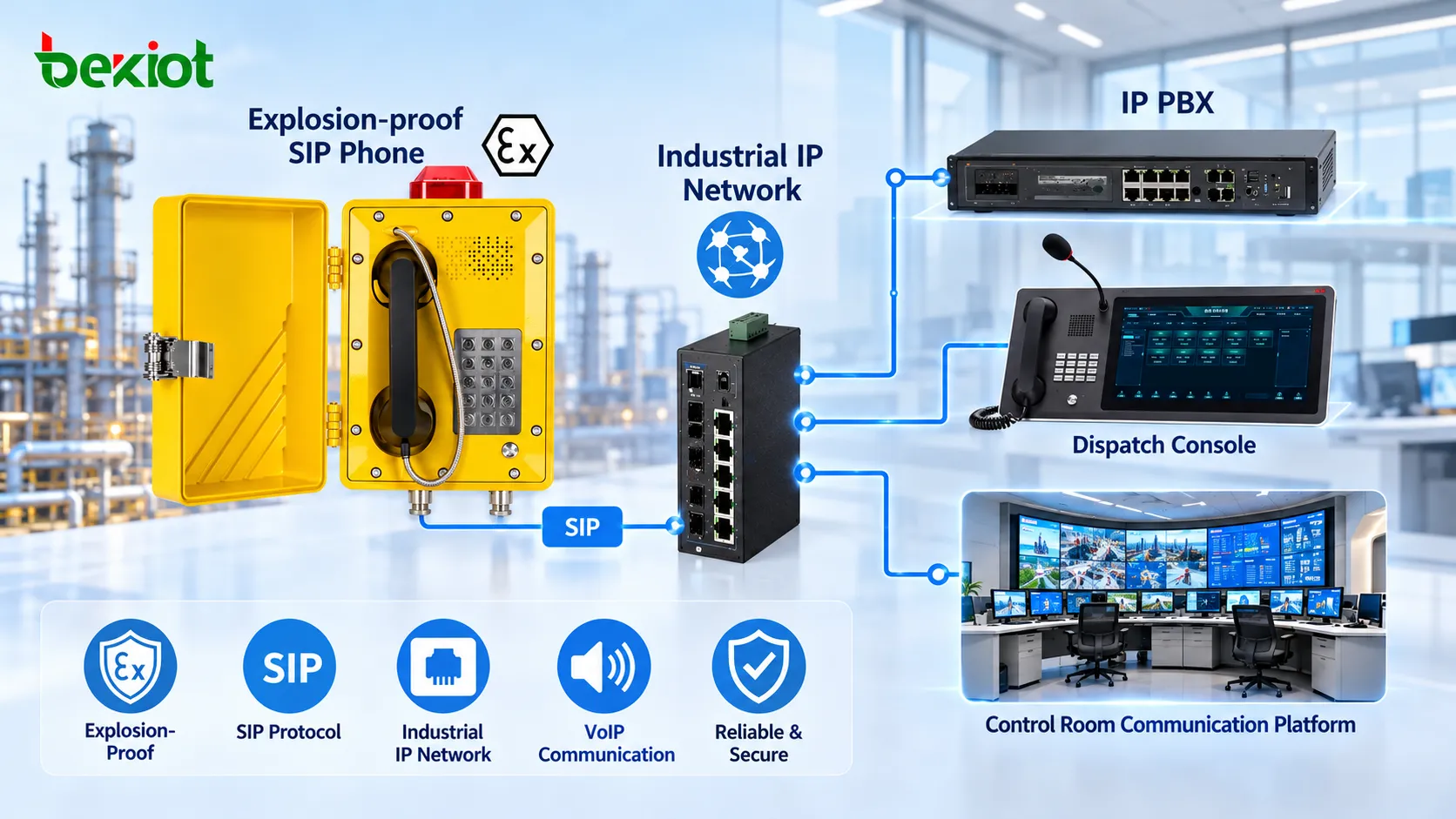
The practical value of an explosion-proof SIP phone is not limited to achieving network calls. It lies in delivering stable communication in special scenarios that must simultaneously meet safety standards, compliance requirements, continuous operation, and environmental durability. For industrial users, the advantages of the SIP protocol are clear. SIP phones integrate seamlessly with IP PBX systems, dispatch consoles, emergency communication platforms, recording systems, broadcast linkage processes, and other IP voice applications. By integrating SIP communication capability into equipment dedicated to hazardous areas, enterprises gain a unified terminal that combines modern network architecture with stringent on-site safety standards.
Technical Analysis
SIP Registration and Call Management
At the signaling level, an explosion-proof SIP phone follows the same general communication logic as other SIP terminals. After connecting to the network, the device automatically registers with a SIP server, IP PBX, or unified communications platform using preconfigured account credentials. Once registered, it can initiate and receive calls, follow a dial plan, use SIP extensions, join incoming call groups, or integrate with dispatch workflows, with specific functions determined by the backend system architecture.
In actual deployment scenarios, the phone can be assigned to a central control room, maintenance teams, remote sites, production units, loading areas, or emergency assembly points. When a worker picks up the handset or presses a button, the terminal sends SIP signaling to the server, which routes the call according to preset rules. The called party can be another phone on site, a dispatch console, a supervisor's office extension, a service point terminal, or an emergency reception center. In advanced systems, the same terminal can also integrate broadcast paging, group calls, and call recording.
The device uses the standard SIP protocol and naturally integrates into modern IP communication infrastructure. It helps industrial enterprises abandon isolated analog communication islands and bring hazardous area communication equipment into a centralized management network built on the same foundation as IP PBX systems, public address, internal intercom, and dispatch systems.
Voice Transmission over IP Networks
Once a call is established, the phone transmits audio data over the IP network along the media path defined by the project deployment plan. Simply put, the explosion-proof SIP phone captures voice through a built-in microphone or handset, performs signal processing and audio encoding, and sends the data over the network to the remote device; incoming voice is transmitted in the reverse direction and played through the handset or an external speaker. Specific codecs, audio tuning, and security functions are determined by product design and platform compatibility.
Industrial hazardous areas commonly have high background noise, making voice playback performance critical. Production plants, equipment rooms, offshore decks, mining areas, compressor stations, loading yards, and workshops exceed the limits of ordinary office-grade audio equipment. For this reason, most explosion-proof SIP phones are equipped with loud ringers, high-power speakers, echo suppression, and noise reduction modules, along with handset and hands-free modes to adapt to demanding industrial environments.
This is the core reason these devices go beyond mere compliance. Daily maintenance dispatch, hazard inspections, alarm verification, incident reporting, and emergency response all require the device to remain stable and available. Even if it meets industry standards, a device that cannot capture and transmit clear voice in a noisy site creates no real operational value.
Structural Hazardous Area Protection Design
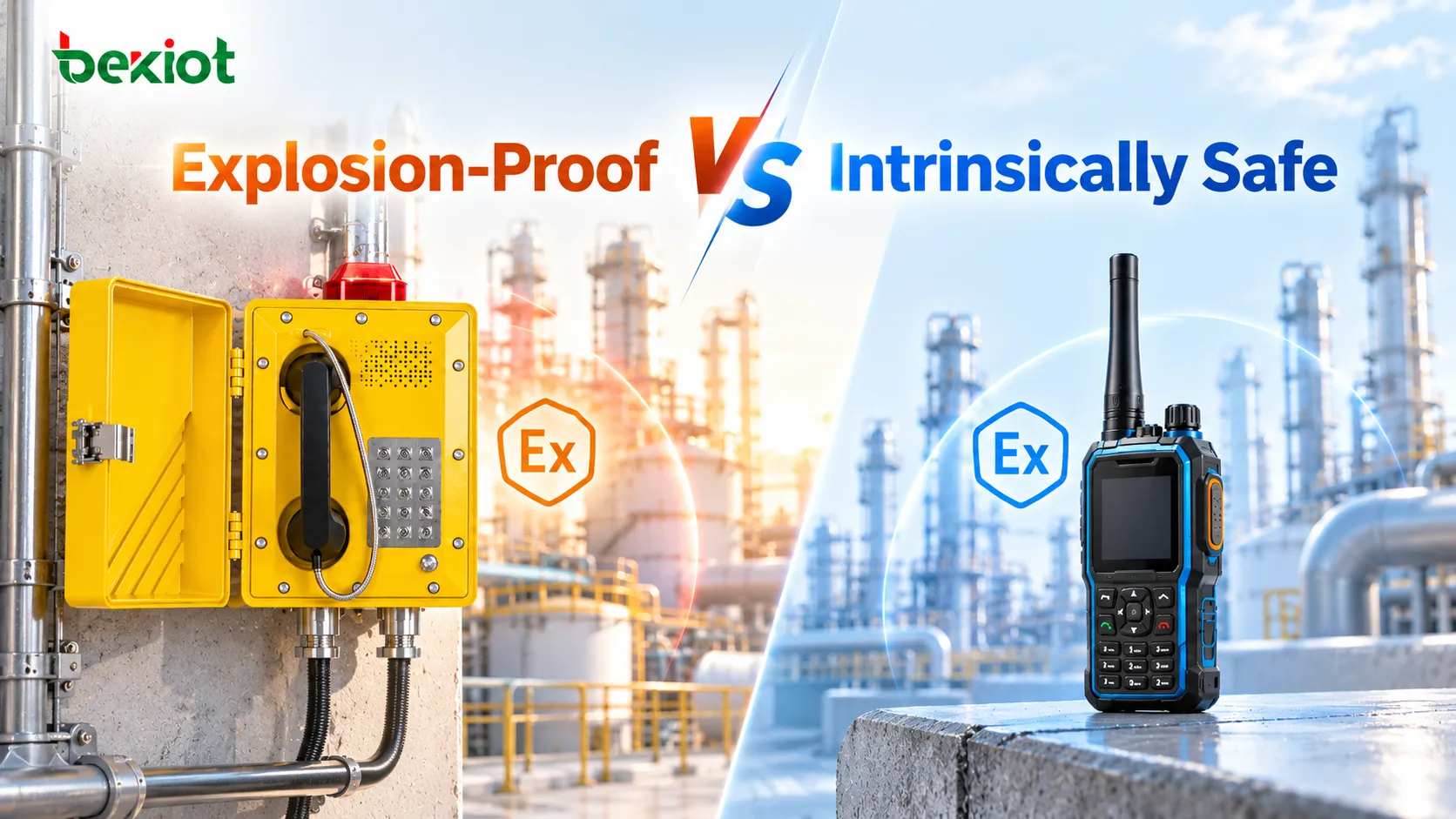
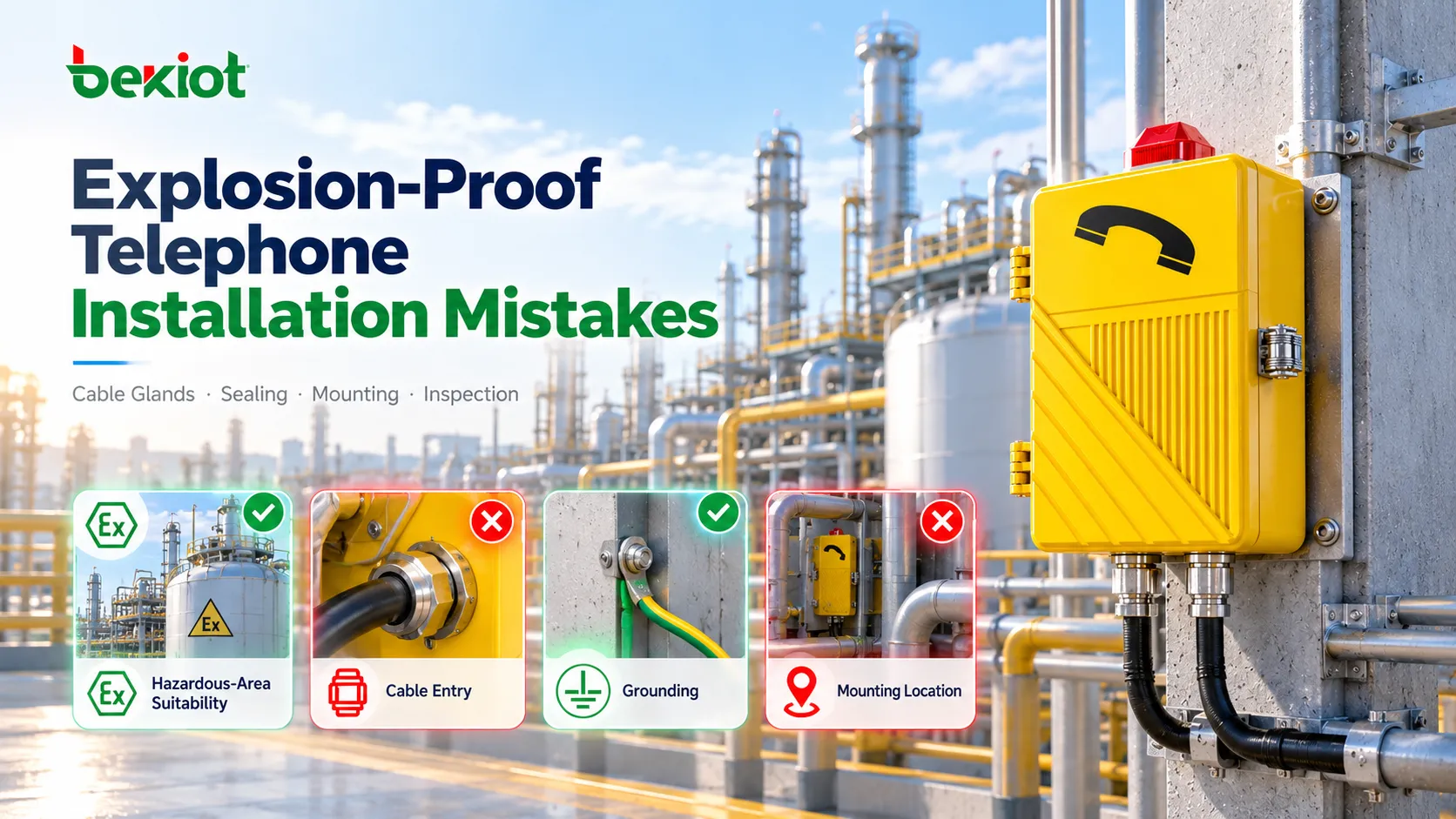
The core difference between an explosion-proof SIP phone and an ordinary desktop SIP phone lies in hardware construction standards and the hazardous location compliance certification system. The enclosure, cable interfaces, internal circuit design, temperature control scheme, sealing structure, material selection, and mechanical strength must fully match the protection standards and certification system of the application scenario. This is the key reason equipment selection must rely on official explosion-proof certification documents rather than generalized industrial marketing claims.
Depending on market standards and project execution requirements, installation compliance may reference ATEX, IECEx, zone/division systems, and local regulatory frameworks. Engineers must verify that the selected phone fully matches the site area class, environmental conditions, and installation method. Most projects also review ingress protection rating, corrosion resistance, operating temperature range, connector compatibility, mounting method, and later maintenance requirements.
From the network telephony perspective, the communication process is similar to conventional devices, but the safety protection logic is highly specialized. An ordinary SIP phone only solves "how to make a call over the IP network," while an explosion-proof SIP phone tackles a more demanding problem: "how to achieve safe and stable IP voice communication in a potentially explosive atmosphere."
Core Features
Hazardous Area Certification and Protective Structure
The core characteristic of these devices is complete hazardous area suitability. This includes target-market-specific compliance certification, matching protective design, and a nameplate indicating installation scope and usage limitations. Buyers should focus on official certification suitability rather than one-sided marketing claims; a model suited to only one zone, gas group, or temperature class cannot be directly applied to other hazardous scenarios.
Protective structural design is equally indispensable. Mainstream explosion-proof SIP phones use high-strength sealed enclosures, sealed cable interfaces, corrosion-resistant materials, reinforced handsets, and industrial-grade hardware, built for long-term service in humid, dusty, and chemically aggressive environments. In outdoor and industrial deployments, water, dust, impact, and vibration resistance are just as important as the basic calling function.
Therefore, a professional product description does not simply state "explosion-proof" but details the certification basis, enclosure protection rating, operating environment parameters, and installation conditions, clearly defining the actual suitability range of the device.
SIP and Network Telephony System Integration
One of the core advantages of explosion-proof SIP phones is compatibility with the IP ecosystem common to modern industrial communication. They integrate seamlessly with SIP servers, IP PBXs, operator consoles, recording platforms, public address interfaces, targeted paging applications, emergency call workflows, and centralized dispatch software. There is no need to isolate the hazardous area as a communication island; through SIP, on-site terminals become part of a unified network.
High integration supports both daily operations and emergency response. Maintenance personnel in high-risk production units can call the central control room directly, remote sites can be included in a unified dispatch plan, and hazardous area phones can be bound to dedicated extensions and alarm linkage mechanisms. Some deployments also connect the devices to broadcast zones, service points, and visual supervision systems, comprehensively improving cross-area communication collaboration.
In short, SIP technology upgrades the phone from an isolated standalone terminal to a manageable node within a larger operational communication architecture. This is the core reason many industrial projects abandon traditional standalone devices and prioritize SIP-based hazardous area phones.
Industrial-Grade Audio Performance and Operational Practicality
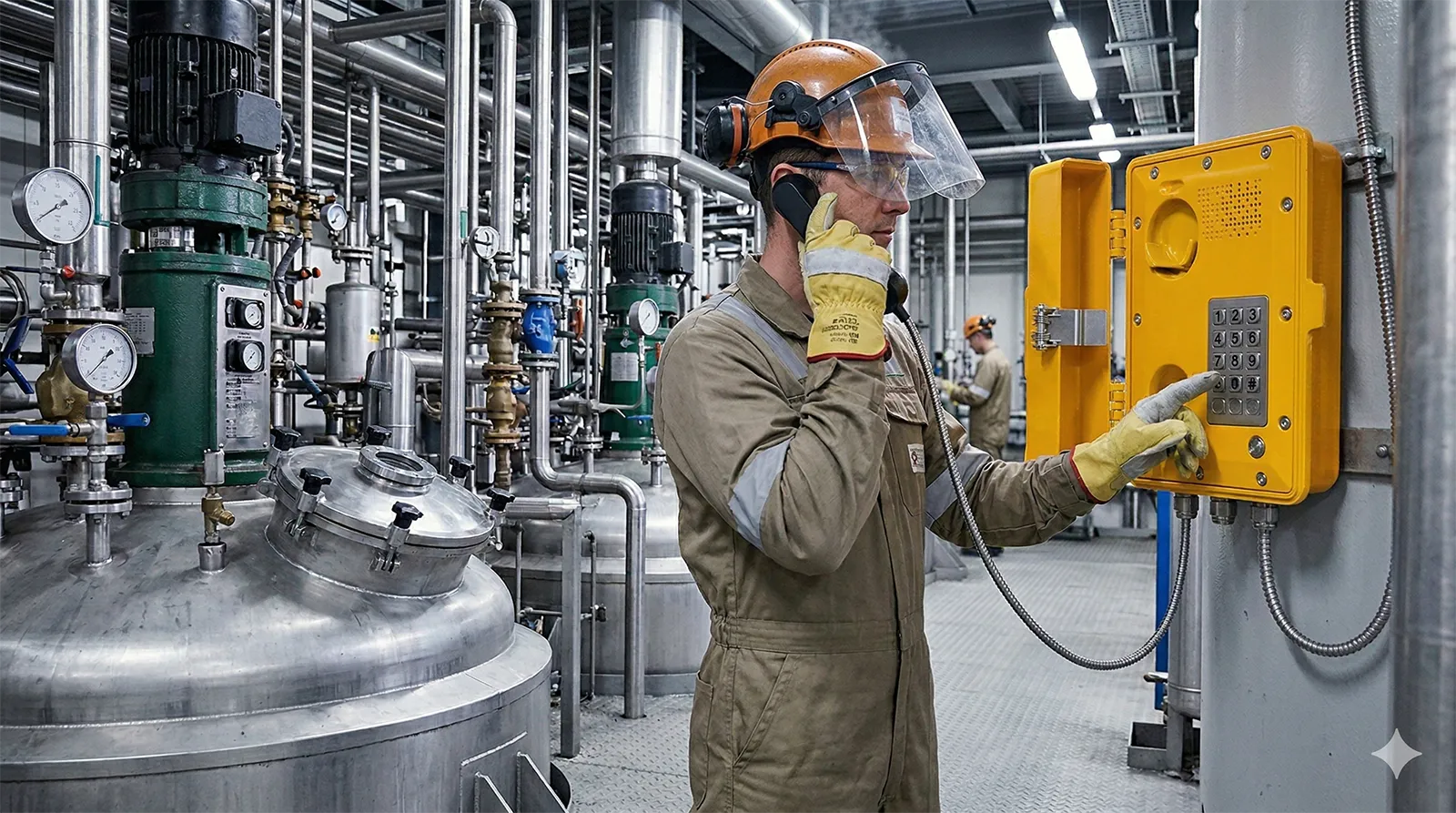
Field communication often involves high-pressure work, loud noise, and objective environmental constraints. Workers typically need to wear gloves, helmets, and hearing protection, compounded by extreme weather, heavy machinery noise, and low visibility, making device operability particularly important. Explosion-proof SIP phones generally feature large buttons, high-contrast visual design, durable hook switches, and loud ringers, combined with handset and speakerphone modes to suit harsh working conditions.
Audio quality affects not only user experience but is directly linked to production safety. In maintenance troubleshooting, work permit approval, production condition verification, equipment shutdown operations, and emergency response, unclear voice recognition can delay action and aggravate safety risks. These devices generally strengthen HD voice capture and high-power playback to operate stably in noisy industrial environments; some models optimize the hands-free experience, while others offer reinforced handset styles to suit different operator habits.
Quality industrial equipment is not defined by feature stacking but by whether operators can quickly master it, communicate clearly, and rely on it stably over the long term under harsh conditions.
High Reliability, Power Supply, and Deployment Flexibility
Industrial communication equipment must operate continuously over long periods and is often deployed in remote, harsh locations, making robust structural design, stable network transmission, and diverse power supply options mandatory. Depending on product design, the device may support Power over Ethernet, dedicated DC power, and scenario-customized power modes. During procurement, power parameters should be verified in advance, especially for long-distance cabling and outdoor installation scenarios.
Deployment flexibility directly determines project outcomes. Installation method, wall-mount bracket design, cable connector layout, weather-resistant sealing, maintenance access planning, and maintenance management model all affect the device's practical usability at the target site. For example, steel plant pipe rack areas, offshore production platforms, and mining transfer stations have completely different requirements for corrosion resistance, washdown tolerance, installation operating space, and operating temperature range.
The reliability of hazardous area communication equipment cannot be defined by a single parameter; it is the combined result of network suitability, power supply scheme, enclosure structure, environmental durability, and certification compliance.
In hazardous area projects, the core question is not "does this phone support SIP," but "does this certified SIP phone fully match the site conditions, communication workflows, and maintenance management model."
Main Application Scenarios
Oil and Gas and Petrochemical Production Facilities
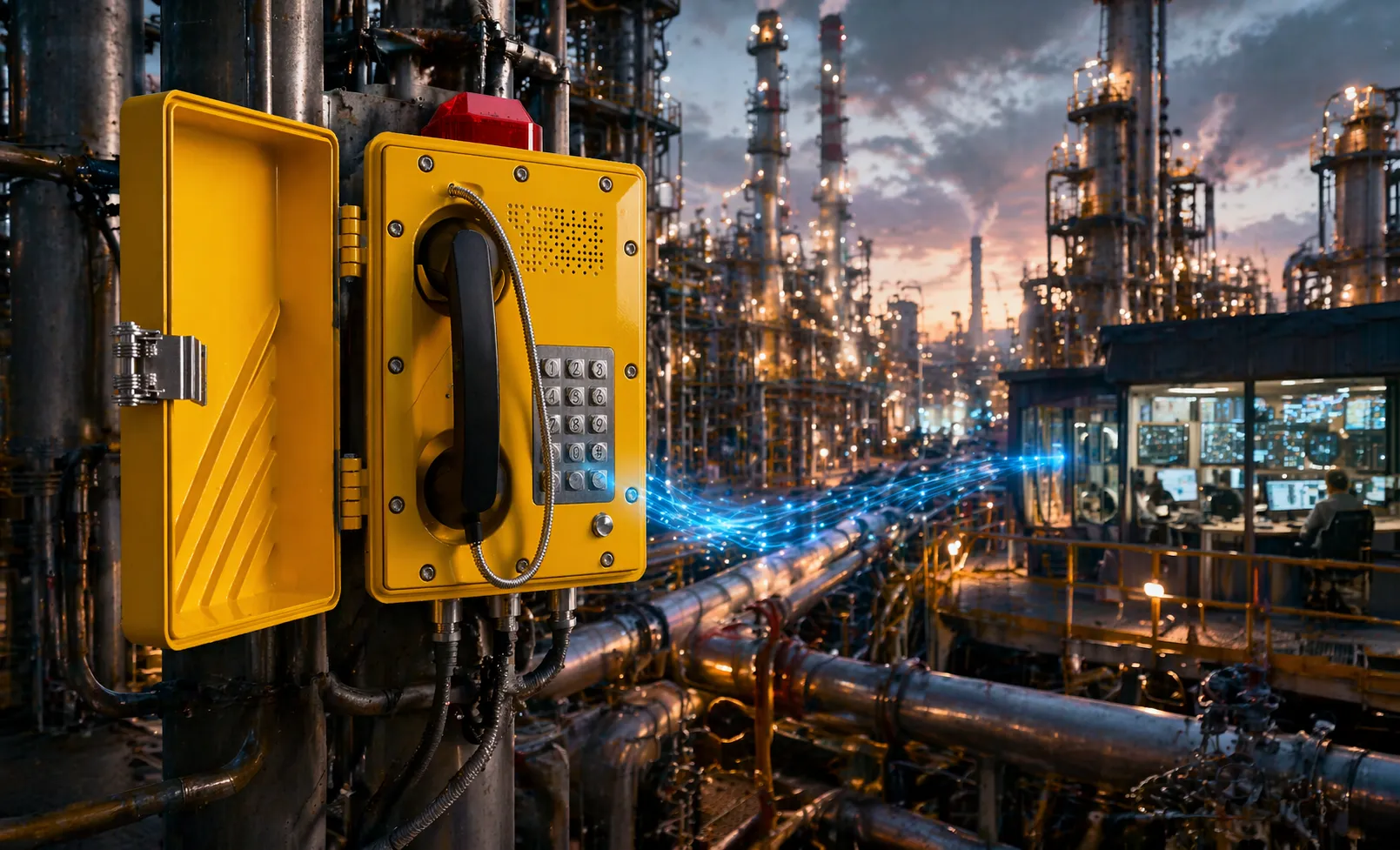
Oil and gas extraction and refining scenarios are the core application field for explosion-proof SIP phones. Refineries, natural gas processing units, chemical plants, tank farms, and loading systems all require stable voice communication between field workers and the central control room. In such environments, workers need to report production conditions in real time, confirm work permits, request rescue assistance, and coordinate maintenance work, ensuring efficient communication throughout equipment startup and shutdown.
SIP-based deployment offers significant advantages: hazardous area terminals can connect directly to the plant-wide voice system. Calls can be automatically routed to production workshops, security duty rooms, maintenance offices, emergency rescue teams, and dispatch consoles without relying on legacy standalone networks. This effectively improves visual management of plant communication and simplifies plant-wide communication operations.
At the same time, environmental control and compliance standards at such sites are extremely stringent. Corrosive atmospheres, outdoor weather effects, production noise, and hazardous area classification management are hard requirements that mandate compliant industrial-grade SIP phones; ordinary commercial office equipment is prohibited.
Offshore Platforms, Marine Engineering, Mining, and Heavy Industry
Offshore platforms and marine industrial facilities face long-term salt spray corrosion, strong winds, equipment vibration, high humidity, and strict safety regulations, with extremely harsh communication environments. In such scenarios, explosion-proof SIP phones are deployed in production areas, equipment compartments, deck entrances, utility stations, and logistics support areas, establishing stable communication links with production control centers and emergency contact points.
The mining and heavy industry sectors also urgently need high-durability hazardous area communication equipment. Depending on production processes, communication systems must cover large operating areas and enable collaboration among frontline workers, management, dispatchers, and emergency rescue personnel. Reinforced SIP phones can integrate dispersed operating points into a centralized voice management architecture, breaking down communication islands.
The core value of offshore and heavy industry scenarios is highly consistent: providing stable, site-appropriate communication on the front line of production, while connecting to a centralized IP management platform.
Fuel Storage and Transport, Ports, Utilities, and Production Infrastructure
Explosion-proof SIP phones are also widely used in cargo terminals, tank farms, transfer stations, municipal utility infrastructure, and fuel storage points that require fixed point-to-point communication. Workers can call the central control room from pump station areas, transfer platforms, loading jetties, and near key equipment, ensuring immediate response and stable, uninterrupted communication in outdoor industrial environments.
Compared with complete reliance on mobile terminals, fixed-deployment resident communication points are better suited to these scenarios. Fixed SIP phones offer fixed installation locations, continuous stable power, and direct connection to enterprise voice systems, greatly optimizing maintenance work, production collaboration, and emergency escalation efficiency.
Many plants have dispersed points and large footprints. SIP system integration helps enterprises standardize extensions, call routing, and equipment management across multiple campuses.
Emergency Communication and Production Dispatch Collaboration
In addition to daily business communication, explosion-proof SIP phones are an important part of the plant emergency support system. During abnormal conditions, workers can quickly report media leaks, request shutdown confirmation, report safety hazards, and contact emergency response departments with one touch. Compliant communication equipment fixed in hazardous areas provides an efficient and convenient emergency help channel.
In daily production, the same terminal can carry non-emergency collaboration work around the clock, including maintenance planning, contractor access control, work permit verification, production instruction delivery, site condition patrols, and technician dispatch. Therefore, the device is by no means a single emergency-only device but a basic supporting facility for daily plant production operations.
It is this dual-scenario suitability that keeps such products in essential demand amid the digital upgrade trend of industrial plants. In scenarios with extremely high requirements for voice clarity and accountability traceability, fixed voice terminals remain one of the most efficient contact methods.
Conclusion
The explosion-proof SIP phone is a specialized communication terminal that applies SIP-based network telephony to high-risk industrial environments. Its core value is not only providing voice calling service but enabling compliant communication under the multiple constraints of potentially explosive atmospheres, balancing environmental requirements, operating rules, and certification standards. It is the key link between modern IP communication technology and industrial site safety standards.
For operators in demanding industrial sectors such as oil and gas, petrochemicals, offshore engineering, fuel storage and transport, and mining, this series of phones supports both daily work collaboration and emergency response, integrating seamlessly with IP PBX and dispatch system architecture. With proper selection and deployment, it expands communication coverage, ensures continuous production operation, and helps bring hazardous area voice terminals into the enterprise's unified communication strategy.
If you are evaluating a hazardous area voice communication solution for an industrial plant, Becke Telcom can help you sort out deployment requirements, plan the communication architecture, and tailor an explosion-proof SIP phone solution suited to the site environment.
Frequently Asked Questions
Is an explosion-proof SIP phone the same as an ordinary industrial IP phone?
No. An ordinary industrial IP phone is ruggedized with dust, water, temperature, and drop resistance, but it does not have the specialized compliance qualification for classified hazardous areas and cannot be used directly in high-risk explosion-proof scenarios. An explosion-proof SIP phone must be selected and installed according to hazardous area-specific approval standards and site requirements.
Can an explosion-proof SIP phone connect to an IP PBX?
Yes, this is one of its core advantages. The device uses standard SIP protocol and can typically integrate with SIP servers, IP PBXs, and dispatch platforms, bringing standalone hazardous area communication terminals into a centralized IP communication management system.
What are the main application scenarios for explosion-proof SIP phones?
They are widely used in oil and gas facilities, chemical and petrochemical plants, offshore platforms, tank farms, transfer stations, mining areas, and other high-risk industrial areas where explosive gases exist and fixed communication points are required.
Why is certification more important than appearance?
Site suitability in hazardous areas depends on officially approved protection technology and compliant installation conditions, not on enclosure thickness. Enclosure design has reference value, but the match between certification basis and site conditions is the core criterion for determining whether the equipment can be used safely.
What should buyers check before selection?
Key items to confirm include the hazardous area class, mandatory certification requirements, SIP protocol compatibility, site environmental conditions, audio usage requirements, installation method, power supply scheme, and maintenance management model. Scientific selection must balance hard safety and compliance requirements with actual communication performance.